
Mallampati Score and Sleep Apnea: What Classes I to IV Mean
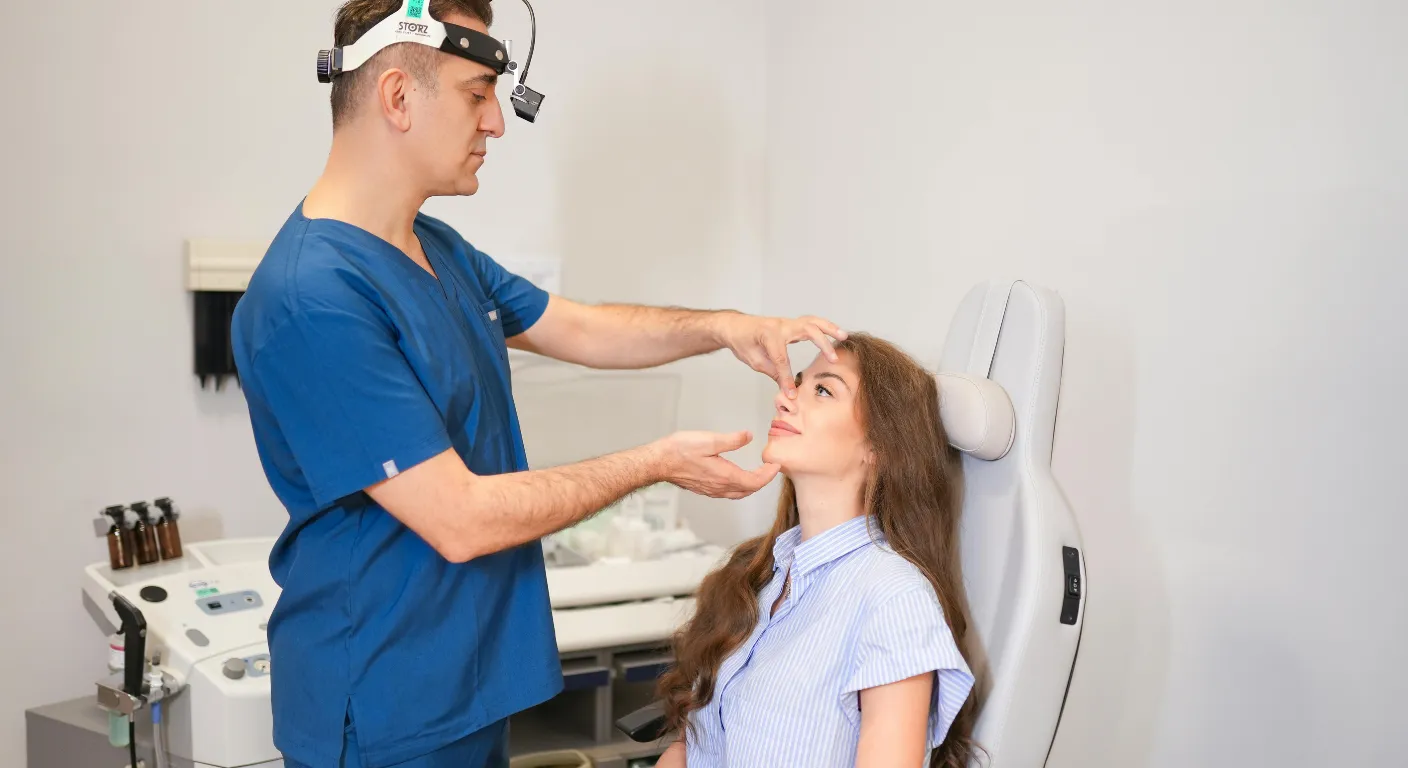
The Mallampati score is a four-class visual grading of how much of the back of the throat is visible when a seated patient opens wide and sticks out the tongue. Class I means the full soft palate, uvula, and tonsillar pillars are visible. Class IV means only the hard palate is visible. Higher classes are associated with greater odds of obstructive sleep apnea, but the score is a risk marker and cannot diagnose anything by itself.
What Is the Mallampati Score?
The classification was introduced in 1985 by the anesthesiologist Dr. Seshagiri Mallampati to predict difficult intubation. The original version had three classes. In 1987 Samsoon and Young added a fourth, and that modified four-class version is the one in use today. Because the same crowding that makes intubation difficult also narrows the airway during sleep, the score was adopted by sleep medicine and later by dental sleep medicine as a quick chairside observation.
What Do Classes I to IV Mean?
Your oral health is more important than you might realize. It's not just about having a bright smile, it's about maintaining your overall well-being. Regular dental check-ups, proper brushing and flossing, and a healthy diet can prevent many dental issues.


The class is assigned from what the examiner can see:
- Class I. The soft palate, the entire uvula, and the tonsillar pillars are visible.
- Class II. The soft palate and most of the uvula are visible. The pillars are hidden by the tongue.
- Class III. The soft palate and only the base of the uvula are visible.
- Class IV. The soft palate is not visible at all. Only the hard palate can be seen.
Classes I and II are generally considered low risk for airway crowding. Classes III and IV indicate a tongue that is large relative to the space it sits in, which is the anatomical setup for collapse during sleep.
How Do You Perform the Assessment Correctly?
The score is only reproducible when the technique is consistent. The standard method is:
- Seat the patient upright with the head in a neutral position.
- Position yourself at the patient's eye level.
- Ask the patient to open the mouth as wide as possible.
- Ask the patient to protrude the tongue as far as possible.
- Do not ask the patient to say ah. Phonation lifts the soft palate and produces a falsely low class.
- Do not use a tongue depressor.
- Record the class immediately, along with tonsil size and any other findings.
The most common errors are scoring with the patient reclined in the dental chair, allowing phonation, and accepting a half-open mouth. Each of these shifts the class and makes comparisons between visits or between examiners unreliable.
How Strong Is the Link to Sleep Apnea?
A 2006 study by Nuckton and colleagues in the journal Sleep examined 137 adults referred for sleep evaluation and found the Mallampati score to be an independent predictor of both the presence and the severity of obstructive sleep apnea. For every one-class increase, the odds of having obstructive sleep apnea more than doubled, and the apnea-hypopnea index rose by roughly five events per hour, after controlling for other airway measurements, body habitus, and medical history.
Later reviews have been more cautious. When the score is used alone as a screening test, its sensitivity and specificity are modest, and it misses patients whose obstruction sits lower in the airway or who have normal anatomy with other risk factors. The reasonable reading of the evidence is that a Class III or IV airway raises suspicion, and a Class I airway does not clear the patient.
How Is It Different From the Friedman Tongue Position?
The two are often confused. The Friedman tongue position uses a similar four-grade picture, but the patient opens wide with the tongue resting inside the mouth, not protruded. The aim is to see the relationship between tongue and palate in a more natural position. Friedman combined this grade with tonsil size and body mass index into a staging system intended to predict the success of palatal surgery. Some clinicians consider the resting-tongue view a closer reflection of what happens during sleep. Whichever a practice uses, the record should state which method was applied, because the two are not interchangeable.
Where Does the Score Fit in Dental Screening?
Dentists look at this anatomy at every examination, which is why the dental chair is such an effective screening point. The score is most useful as one element of a structured screen:
- A validated questionnaire such as STOP-BANG to assess risk.
- The Epworth Sleepiness Scale to assess daytime symptoms.
- Airway observations, including Mallampati class, tonsil size, tongue scalloping, palatal shape, and neck circumference.
- Medical history, including hypertension, atrial fibrillation, and type 2 diabetes.
A patient with a Class III or IV airway and a positive questionnaire should be referred to a physician for a sleep study. The dentist's role is to identify risk and refer. Diagnosis belongs to the physician.
Recording the class as a structured field, instead of a line in free-text notes, pays off later. It lets the practice see how many screened patients were high risk, how many were referred, and how many went on to testing. When screening findings are kept in a single digital patient record, as they are on a platform such as Appnea, the referral letter and the letter of medical necessity can draw on the same data without retyping.
Key Takeaways
- The modified Mallampati score grades visibility of the soft palate, uvula, and pillars from Class I to Class IV.
- The patient must be seated upright, mouth wide open, tongue fully protruded, and silent.
- Each one-class increase was associated with more than double the odds of sleep apnea in a 2006 study in Sleep.
- Used alone, the score is a weak screening test. Combine it with questionnaires and history.
- Record the class as structured data so it can support referral and documentation.
Frequently Asked Questions
Q: What Mallampati score indicates sleep apnea?
A: No score indicates sleep apnea with certainty. Classes III and IV are associated with higher risk and should prompt further screening.
Q: Can a Class I patient have sleep apnea?
A: Yes. Airway collapse can occur at levels the score does not show, and factors such as weight, age, and muscle tone also contribute.
Q: Should the patient say ah during the exam?
A: No. Phonation raises the soft palate and lowers the apparent class.
Q: Does the Mallampati class change over time?
A: It can. Weight gain, aging, and pregnancy can increase the class, and weight loss can reduce it.
Q: Can a dentist diagnose sleep apnea from the Mallampati score?
A: No. The score supports a referral. Only a physician can diagnose sleep apnea, based on a sleep study.
Final Thoughts
The Mallampati score takes ten seconds and costs nothing, which is why it has survived four decades. Its value depends entirely on doing it the same way every time and treating the result as a prompt for the next step. A high class with no questionnaire, no referral, and no record is an observation that helped nobody. Built into a consistent screening routine, it is one of the simplest ways a dental team can find patients who have been living with an undiagnosed breathing disorder. This article is general education and not medical advice.

Need help ?
Schedule your initial consultation today and start your journey towards a pain-free, healthier smile. Contact us now!
Blog Suggestions

Scalloped Tongue: Causes, and When It Points to Sleep Apnea
Why the edges of the tongue become wavy, the common causes from clenching to hypothyroidism, what the research says about the link to obstructive sleep apnea, and what a dentist should do on seeing one.

Is Mouth Taping Safe If You Have Sleep Apnea?
Mouth taping is not a treatment for sleep apnea and can be unsafe with a blocked nose. What the small studies actually show, who should not tape, and the better-supported ways to keep the airway open.

How to Stop Snoring: What Works, and When It's Sleep Apnea
Why people snore, the home changes worth trying first, which anti-snoring products help, the signs that snoring is actually obstructive sleep apnea, and how a custom oral appliance from a dentist fits in.
How to Read Sleep Study Results: AHI, RDI, and ODI Explained
What AHI, RDI, REI, and ODI mean on a sleep study report, the severity thresholds for adults, why the 3 percent and 4 percent hypopnea rules give different scores, and how the numbers decide oral appliance coverage.