
Correspondence Regarding Pediatric OSA, Snoring and Oropharyngeal Dysbiosis

Sleep-disordered breathing in children has long been framed as a mechanical problem: enlarged tonsils and adenoids, a narrow airway, a retruded jaw. A growing body of work now suggests the story is also microbial. Reports describing oropharyngeal dysbiosis—and a mild imbalance further down the gastrointestinal tract—in children with obstructive sleep apnea (OSA) and primary snoring have prompted considerable discussion. This correspondence-style commentary reviews what such findings plausibly mean, where the interpretation should stay cautious, and how clinicians in dental sleep medicine might sensibly respond.
The central claim is straightforward: children who snore habitually, whether or not they meet polysomnographic criteria for OSA, appear to carry a different oropharyngeal microbial community than children who breathe quietly. Reported patterns typically include reduced diversity, a relative expansion of potentially pathogenic genera, and a shift away from commensal organisms that normally dominate the healthy throat. Alongside this, stool or gut-derived markers often show a milder—but still measurable—departure from the expected pediatric profile.
What the Findings Actually Describe
The observed associations are cross-sectional. They describe two things occurring together in the same children, not a demonstrated causal sequence. That distinction matters more here than in most discussions, because at least three explanations fit the same data equally well. Dysbiosis could contribute to airway inflammation and lymphoid hypertrophy; airway obstruction could alter the oropharyngeal environment enough to reshape which organisms thrive there; or a shared upstream factor could drive both.
Your oral health is more important than you might realize. It's not just about having a bright smile, it's about maintaining your overall well-being. Regular dental check-ups, proper brushing and flossing, and a healthy diet can prevent many dental issues.

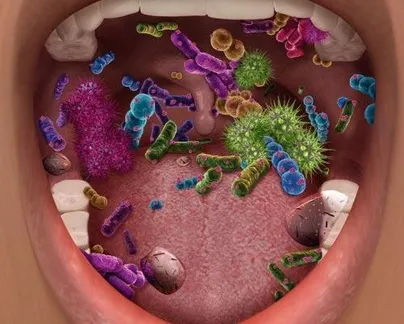
Why Mouth Breathing Is a Serious Confounder
Any child who snores loudly is likely breathing through the mouth for much of the night. Chronic mouth breathing dries the oral and pharyngeal mucosa, reduces salivary flow across tissue surfaces, lowers local oxygen gradients, and changes pH. Those are precisely the conditions that select for a different microbial community. In other words, a substantial part of the reported dysbiosis may be a downstream consequence of the breathing pattern rather than a cause of it. Studies that do not carefully quantify nasal patency and mouth-breathing behaviour cannot easily separate the two.
The Primary Snoring Group Is the Most Interesting Signal
The detail worth dwelling on is that primary snorers—children with habitual snoring but a normal apnea-hypopnea index—often show microbial shifts in the same direction as children with frank OSA. Under the traditional view, primary snoring is comparatively benign and does not warrant intervention. If a reproducible biological difference is present in that group, it argues that the AHI alone is a coarse instrument in children, and that snoring without measurable apneas is not automatically inconsequential.
The Gut Component Deserves Measured Language
Reported gastrointestinal changes in these cohorts are usually described as mild. That word should be preserved. Intermittent hypoxia, sympathetic activation, and disrupted sleep architecture can all plausibly influence gut ecology, and swallowed oropharyngeal organisms provide a further route of communication between the two compartments. But mild imbalance in a small cohort is a hypothesis-generating observation, not grounds for describing pediatric snoring as a gastrointestinal disease or for recommending microbiome-directed treatment.
Methodological Points That Limit Confidence
Sampling technique:
Throat swabs, saliva, and tonsillar surface samples do not sample the same community, and results are not interchangeable between studies.
Sequencing depth and region:
Short-read 16S surveys of selected variable regions resolve genus far better than species, which constrains how specific any pathogenic claim can be.
Confounders that are rarely fully controlled:
Recent antibiotic exposure, diet, breastfeeding history, allergic rhinitis, caries burden, oral hygiene, body mass index, and household environment all shape both airway anatomy and microbial composition.
Cohort size and control matching:
Many reports rest on modest sample sizes with controls recruited differently from cases, which inflates the apparent effect.
What Would Make the Case Stronger
The obvious next step is longitudinal. Sampling children before and after adenotonsillectomy or a course of myofunctional and orthodontic airway therapy would show whether the microbial pattern normalises once breathing improves. If it does, dysbiosis is largely consequence. If it persists in children whose snoring resolves, or if baseline microbial profile predicts who responds to treatment, the argument for a contributory role becomes much more credible. Interventional work would need to come after that, not before.
Relevance to Dental Sleep Medicine
For clinicians who see these children, the practical implications are modest but real. None of this changes the diagnostic pathway: habitual snoring in a child still warrants a proper airway assessment and referral for sleep evaluation rather than reassurance. What it does support is treating oral and periodontal health as part of airway care rather than a separate concern, documenting mouth breathing and nasal obstruction explicitly, and taking parental reports of snoring seriously even when a sleep study returns a normal AHI.
Interpreting Findings for Parents
Families increasingly arrive having read that their child's snoring is a microbiome problem. The honest framing is that researchers have found differences in the mixture of bacteria in the throats of children who snore, that it is not yet known whether those differences help cause the snoring or simply result from it, and that no probiotic or microbiome-targeted product has been shown to treat pediatric sleep-disordered breathing. The proven interventions remain the established ones.
Final Thoughts
The association between pediatric OSA, primary snoring, oropharyngeal dysbiosis, and mild gastrointestinal imbalance is a genuinely interesting observation that widens how sleep-disordered breathing in children might be understood. It is best read as evidence that the airway is a biological environment as well as a mechanical tube, and that habitual snoring may carry more significance than the apnea-hypopnea index alone conveys. It is not yet evidence of causation, and it does not justify altering management. The appropriate response is longitudinal study, careful control of mouth breathing and other confounders, and clinical language that reflects what the data can support.

Need help ?
Schedule your initial consultation today and start your journey towards a pain-free, healthier smile. Contact us now!
Blog Suggestions

Actigraphy Shows Many Adults Underestimate Their Sleep Duration
Wrist actigraphy often records more sleep than adults report, especially in poor sleepers. Here's why the gap appears, why fragmented breathing widens it, and how the discrepancy itself becomes useful clinical information.

Why Airway Orthodontics Is Going Mainstream And What That Means for Your Practice
Airway orthodontics is moving from the fringe to mainstream dentistry. Here's what it actually is, why it's gaining momentum, where it fits in a general practice, and how to adopt it responsibly without overreaching on the evidence.
Prevention of Temporomandibular Disorders in OSA Patients Referred for Oral Appliance Therapy
How to keep jaw joint problems from derailing oral appliance therapy — baseline TMD screening before the appliance is made, appliance design and titration discipline, early review in the first ninety days, and what the referral loop needs to communicate.

When a Kid's Bad Behavior Is Actually a Hidden Sleep Disorder
Hyperactivity and trouble focusing in children can be the daytime face of sleep-disordered breathing. How dental teams can screen for it during a routine pediatric visit, raise it with parents without overstepping into diagnosis, and build the referral pathway that follows.