
MAD-FIT, Seven Years On
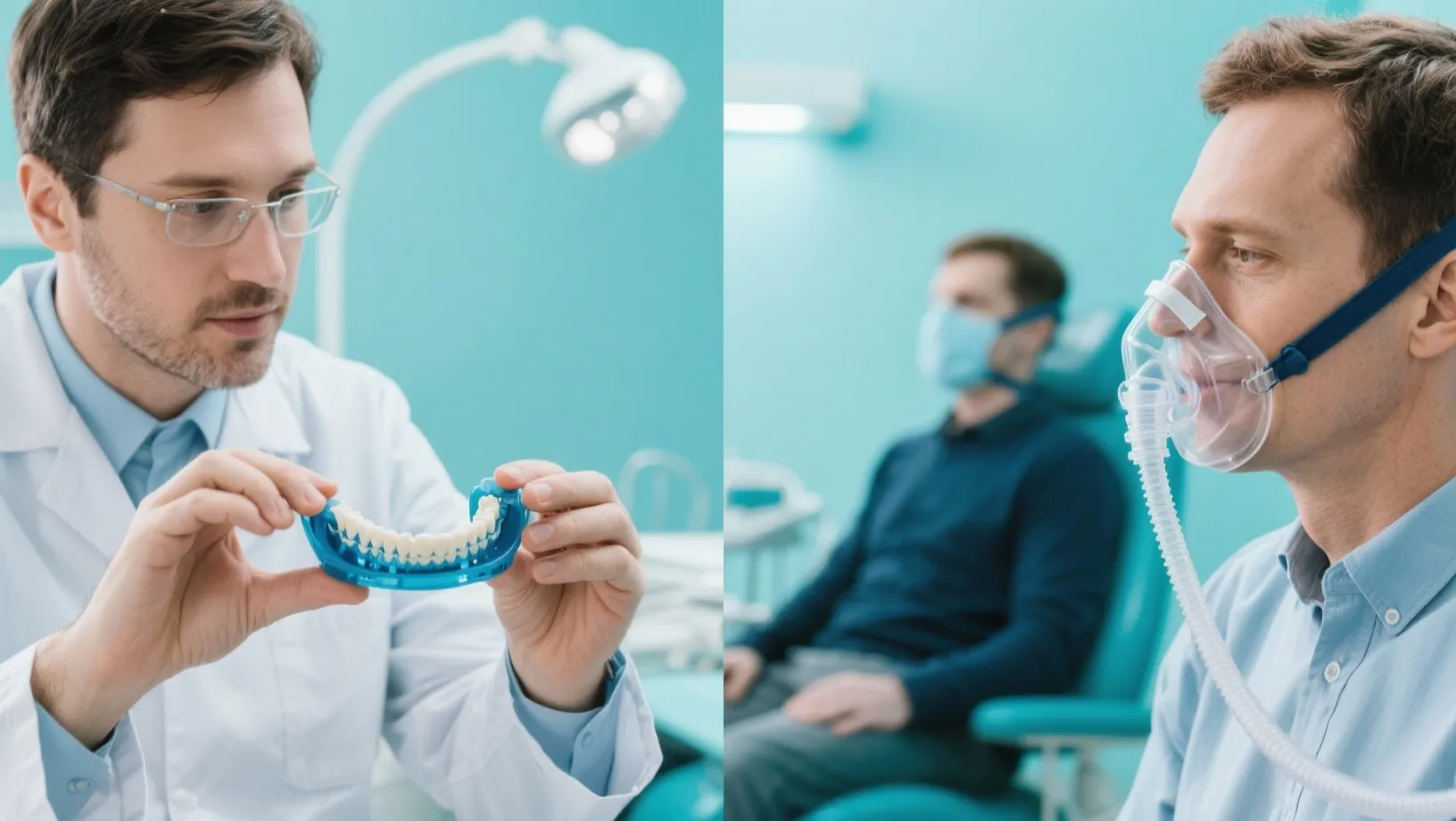
Seven years ago we argued that oral appliance efficacy was ready for augmented intelligence — that the guesswork in selecting a starting protrusive position and advancing from it was a data problem waiting for a data solution. MAD-FIT was built on that premise. This is the follow-up that the original post promised: what accumulated titration data actually shows about first-night efficacy, how it changes the follow-up burden, and where the honest limits of the approach sit.
The Problem the Original Post Identified
Conventional titration is an educated guess followed by iterative correction. The clinician selects a starting position — commonly a percentage of maximum comfortable protrusion — and advances in increments based on patient-reported snoring and sleepiness until symptoms resolve or tolerance is exhausted. Objective confirmation comes at the end, weeks or months later, with a single appliance-in-place sleep test.
Three costs follow from this. Titration takes weeks during which the patient is inadequately treated. It consumes multiple appointments. And the endpoint is determined by subjective report, which correlates imperfectly with AHI — patients frequently feel better before their breathing is adequately controlled, and occasionally feel unchanged when it is.
Your oral health is more important than you might realize. It's not just about having a bright smile, it's about maintaining your overall well-being. Regular dental check-ups, proper brushing and flossing, and a healthy diet can prevent many dental issues.

What the Titration Data Shows
The central finding from accumulated titration data is that starting position selection is more predictable than conventional practice assumes. Patient-level variables available before the first night — craniofacial measurements, baseline AHI and severity, body mass index, neck circumference, maximum protrusive range, and dentition characteristics — carry meaningful signal about where an effective position is likely to sit.
What that enables in practice:
- Better-informed starting positions. Rather than defaulting to a fixed percentage of maximum protrusion for every patient, the starting position is set from patient-specific features, which shifts more patients into a therapeutic range earlier.
- Fewer titration increments to reach clinical stability. When the starting position is closer to the eventual endpoint, fewer adjustment cycles are required, which shortens the interval during which the patient is undertreated.
- Reduced follow-up burden. Fewer titration visits per delivered case is the operational consequence, and it is measurable. It is also the metric practices most consistently underestimate the cost of, since titration appointments are typically low-revenue and consume prime chair time.
- Earlier identification of likely non-responders. Patients whose predicted response is poor across the protrusive range are identifiable earlier, which allows a return to the sleep physician for alternative therapy rather than months spent proving that an appliance will not work.
The important framing: this is augmented intelligence, not automated prescribing. The output is a starting position and a predicted response curve. The clinician selects, verifies fit, monitors tolerance, and decides. A model that suggests a protrusive position the patient cannot tolerate is wrong regardless of what the data says, and the clinician is the one who knows that.
What Has Not Changed
Seven years of data has not eliminated any of the following, and claims to the contrary should be treated sceptically.
- Objective efficacy testing is still required. A predicted response is a prediction. An appliance-in-place home sleep apnea test interpreted by the sleep physician remains the standard for confirming treatment success, and no amount of titration data substitutes for it.
- Individual variation remains large. Prediction improves the average case and narrows the search; it does not make any individual patient's response certain.
- Tolerance is not predictable from anatomy. Temporomandibular sensitivity, gag response, and simple patient preference are not well captured by structural variables and still require iterative clinical management.
- Non-responders still exist. A meaningful proportion of patients will not achieve adequate control with an appliance at any tolerable position, and identifying them faster is the realistic gain, not eliminating them.
- Data quality determines output quality. Predictions built on incomplete or inconsistently recorded titration records are unreliable, which makes disciplined documentation a prerequisite rather than an optional extra.
What This Means for Practice Operations
The operational value shows up in three metrics worth tracking directly: titration visits per delivered case, days from delivery to confirmed efficacy, and the proportion of cases identified as non-responders before the three-month mark. A practice that reduces titration visits per case meaningfully recovers chair time that converts into new case capacity, which is usually a larger financial effect than anything happening on the billing side.
There is also a referral effect. Sleep physicians referring patients for appliance therapy care about two things: whether the patient gets adequately treated and how long it takes. A practice that can report a shorter median time from referral to confirmed efficacy is making an argument that competing practices cannot easily match.
The Honest Limits
Any clinical prediction tool should be evaluated against three questions, and practices should ask them of any vendor including this one. What population was the model developed on, and does the practice's patient population resemble it? What is the performance on patients who differ from that population — different craniofacial morphology, higher BMI, more severe disease? And what happens when the model is wrong, meaning is the failure mode visible to the clinician or silent? A tool whose errors are silent is more dangerous than no tool. The correct posture is that prediction narrows the search space and the clinician still verifies the result.
Key Takeaways
- Pre-treatment patient variables carry meaningful signal about effective protrusive position, enabling better-informed starting points.
- The measurable operational gains are fewer titration increments, reduced follow-up burden, and earlier identification of non-responders.
- Objective appliance-in-place efficacy testing remains required; prediction does not replace verification.
- Tolerance and patient preference are not well predicted from structural variables and still require clinical management.
- Track titration visits per case and days to confirmed efficacy to quantify the effect in your own practice.
Frequently Asked Questions
Q: Does this eliminate the need for a follow-up sleep test?
A: No. Predicted efficacy is not confirmed efficacy, and payers and guidelines both point toward objective verification.
Q: Can a starting position be set without seeing the patient?
A: No. Fit verification, protrusive range assessment, and temporomandibular screening are physical examinations that must happen chairside.
Q: What if the model's suggested position is uncomfortable?
A: Clinical judgement governs. Back off to a tolerable position and titrate from there; tolerance is a hard constraint the data does not override.
Q: Does this work for all appliance designs?
A: Predictions are design-dependent, since devices differ in force distribution and vertical opening. Applicability should be confirmed for the specific device in use.
Q: What data does the practice need to contribute?
A: Consistent recording of starting position, each titration step with date and response, final position, and objective efficacy results. Incomplete titration records degrade output quality.
Final Thoughts
The 2019 argument was that oral appliance therapy generated a great deal of clinically meaningful data and discarded nearly all of it. That is less true now. The value has landed where it was most likely to — not in replacing clinical judgement about who to treat, but in shortening the mechanical search for a protrusive position that works. The practices getting the most from it are the ones that kept disciplined titration records before any of this was useful, which is a reminder that the prerequisite for benefiting from data tooling is having bothered to record the data.

Need help ?
Schedule your initial consultation today and start your journey towards a pain-free, healthier smile. Contact us now!
Blog Suggestions

Before You Upload a Patient Photo to an AI Tool
A clinical photograph uploaded to a vendor without a BAA is a reportable breach. The PHI questions to ask any AI vendor, and why getting this right is genuine differentiation.

Five Numbers Every Dental Sleep Practice Should Watch Monthly
Screen-to-test conversion, test-to-appliance conversion, days to delivery, titration visits per case, and collected per case — what each measures, what good looks like, and what to do when it moves.
Sleep Apnea Mouth Guards: Do They Work, and Is Custom Worth It?
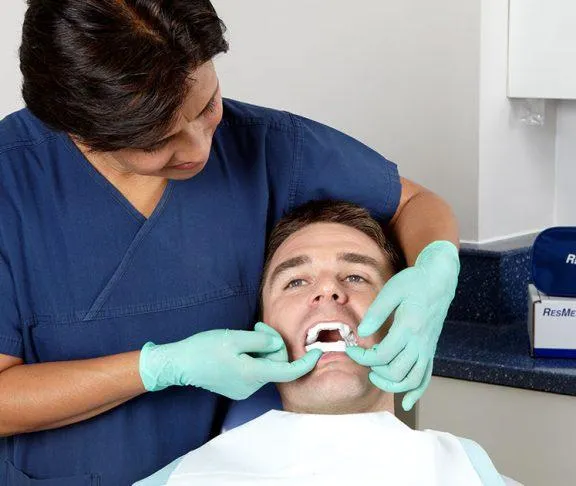
How a sleep apnea mouth guard works, what the AASM and AADSM guideline says, the real differences between custom and over-the-counter devices, typical costs, side effects, and the steps to getting one.
Types of Oral Appliances for Sleep Apnea and How to Choose
Mandibular advancement devices and tongue-retaining devices compared by design: push, pull, dorsal fin, anterior, and milled. Which designs meet Medicare E0486 requirements, and how to match the device to the patient.