
Prevention of Temporomandibular Disorders in OSA Patients Referred for Oral Appliance Therapy
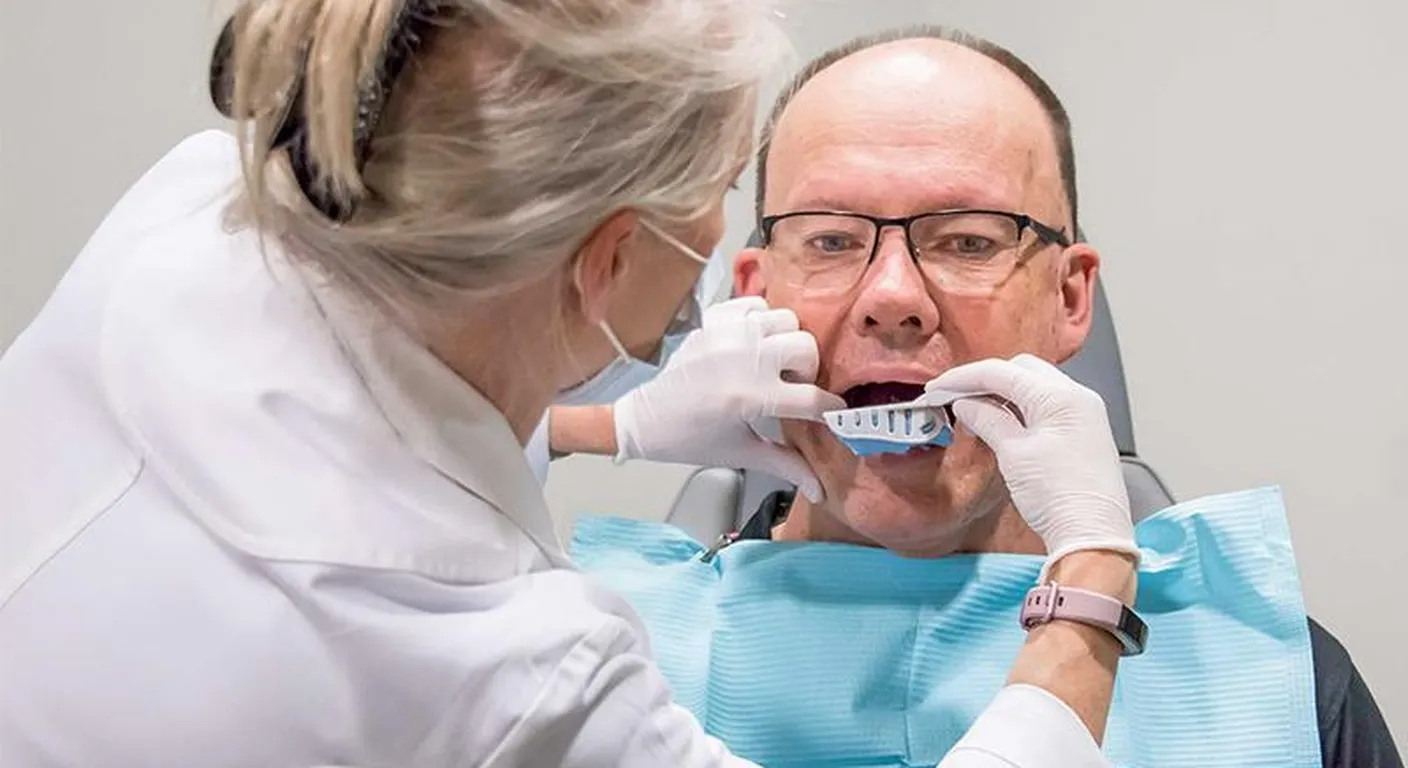
Mandibular advancement devices work by holding the lower jaw forward through the night, and that mechanical reality is inseparable from the temporomandibular joint and the muscles that move it. Most patients tolerate the load well. A minority develop joint or muscular symptoms, and a smaller minority abandon otherwise effective therapy because of them. The useful question for a referring physician or a treating dentist is therefore not whether oral appliance therapy can provoke temporomandibular disorders, but what can be done at the point of referral and during the first months of wear to keep that from happening.
Prevention here is largely unglamorous. It rests on identifying who is already vulnerable, advancing the jaw slowly enough that tissues adapt, and catching early complaints before they consolidate into a chronic pain pattern.
What Actually Happens to the Joint
Protrusion translates and rotates the condyle forward and down, stretches the lateral pterygoid and the joint capsule, alters the resting length of the elevator muscles, and shifts occlusal contacts. Held for six to eight hours a night, that becomes a sustained low-grade loading pattern the masticatory system was not designed around. Most joints accommodate. Where they do not, the presentation is usually morning stiffness, preauricular tenderness, transient difficulty finding the habitual bite, or myofascial soreness in the masseter and temporalis rather than frank internal derangement.
Your oral health is more important than you might realize. It's not just about having a bright smile, it's about maintaining your overall well-being. Regular dental check-ups, proper brushing and flossing, and a healthy diet can prevent many dental issues.
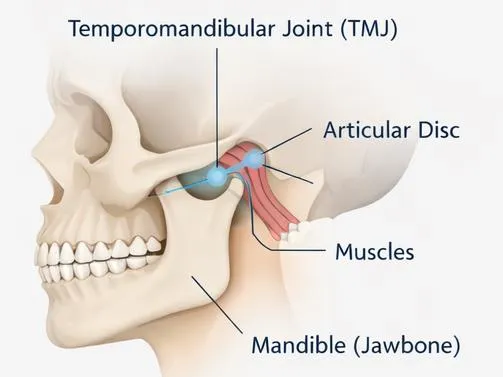
Two points matter clinically. First, most of these symptoms appear early, within the first weeks to months, and most are self-limiting when advancement is managed sensibly. Second, occlusal change is the more durable consequence of long-term wear, and it is a separate conversation from joint pain — but it belongs in the same consent discussion.
Screening Before the Appliance Is Made
The single highest-yield preventive step happens before any impression or scan is taken. A patient referred for oral appliance therapy should receive a deliberate temporomandibular assessment, not an incidental one.
History:
Prior TMD diagnosis or treatment, episodic locking or catching, headache pattern, orofacial pain history, bruxism, and any history of joint surgery or trauma.
Examination:
Maximum comfortable opening, protrusive range, deviation on opening, joint noises with their character and reproducibility, palpation of the joint and the masticatory muscles, and current occlusal contacts recorded before therapy begins.
Dental foundation:
Periodontal status, adequate retentive teeth, restorative integrity, and existing prostheses that will bear appliance loads.
Baseline documentation:
Photographs and a recorded bite. Without these, any later change becomes an argument rather than an observation.
Findings that call for caution rather than refusal include active arthralgia, limited or painful opening, frequent locking, and severe myofascial pain. Active TMD is a reason to treat the joint first, or to co-manage the joint alongside the appliance, and occasionally to prefer a different therapy altogether. It is rarely a reason to decline outright without discussion.
Design Choices That Reduce Load
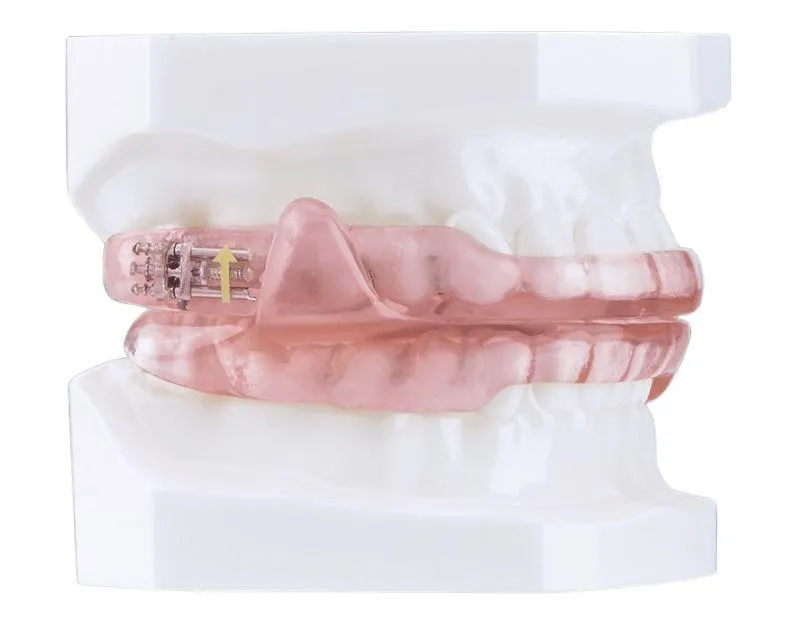
Appliance selection influences how the joint experiences the therapy. Titratable designs allow advancement to be introduced in small increments rather than committed to at delivery, which is the main protective feature. Designs permitting some lateral and vertical freedom tend to be better tolerated by patients with a history of muscular symptoms than rigidly locked ones. Excessive vertical opening adds elevator muscle strain for little airway gain and should be minimised. Balanced, evenly distributed contact prevents the appliance from loading one side of the arch and, indirectly, one joint.
Titration Discipline
Aggressive early advancement is the most common avoidable cause of joint complaints. A conservative protocol starts at a modest fraction of maximum protrusion, advances in small increments spaced far enough apart for tissues to adapt, and stops advancing when symptoms improve rather than when the mechanical limit is reached. If a patient reports joint pain after an increment, the correct response is to hold or reverse the last step, not to push through in pursuit of a target number. Efficacy and comfort are both moving targets; the goal is the smallest advancement that controls the disease.
The First Ninety Days
Early review is preventive, not merely administrative. A short check within the first one to two weeks catches gross fit and loading problems. A review at four to six weeks is where most emerging joint symptoms are identified while they are still easily reversed. By three months, the pattern is usually established and the case can be titrated toward its final position with confidence.
At each visit the useful questions are specific: how long does morning stiffness last, does the bite feel findable within minutes or does it persist, is there pain during wear or only after, and has anything changed in opening range.
Simple Measures That Help
Morning jaw exercises after appliance removal — gentle opening, lateral movements, and returning to the habitual bite — shorten the period of transient stiffness for many patients. Warm compresses help muscular soreness. Instructing patients not to clench against the appliance, and addressing daytime parafunctional habits, reduces cumulative load. Patients should also be told plainly that brief morning stiffness is expected and usually settles, while persistent pain, locking, or an unfindable bite is a reason to call rather than to wait for the scheduled visit.
Managing Symptoms When They Appear
Early joint or muscular complaints in appliance wearers are usually managed by reducing advancement, allowing a short adaptation break where clinically safe, adjusting vertical dimension, refining occlusal contacts, adding jaw exercises, and reviewing sooner. Escalation to physical therapy or a pain specialist is appropriate when symptoms persist beyond a few weeks despite these steps. Discontinuation is a last resort, and when it becomes necessary the sleep physician needs to know promptly so alternative therapy can be arranged rather than left to lapse.
The Referral Relationship
Prevention is also a communication problem. A referral that arrives with the diagnosis, severity, prior CPAP history, and treatment goal allows the dentist to plan titration sensibly. A dentist who reports back the baseline joint findings, the titration position, and any TMD symptoms lets the physician interpret follow-up sleep testing correctly — a patient at submaximal advancement because of joint pain is a different clinical situation from a patient who simply did not respond. Neither side can prevent much in isolation.
Consent That Reflects Reality
Patients should be told, before therapy starts, that transient jaw and tooth discomfort is common and usually settles, that a smaller number develop persisting joint or muscle symptoms requiring adjustment, that long-term wear commonly produces gradual occlusal change, and that these risks are weighed against the cardiovascular, cognitive, and quality-of-life consequences of untreated obstructive sleep apnea. Stated up front, an expected symptom is tolerated. Discovered unexpectedly, the same symptom reads as a complication and drives abandonment.
Final Thoughts
Preventing temporomandibular disorders in patients referred for oral appliance therapy comes down to a handful of habits: assess and document the joint before the appliance exists, choose a titratable design and a conservative starting position, advance slowly and stop at the point of clinical benefit, review early enough to catch symptoms while they are reversible, and keep the referring physician informed throughout. Handled this way, joint complications are uncommon, mostly minor, and rarely a reason to lose a therapy that is otherwise working.

Need help ?
Schedule your initial consultation today and start your journey towards a pain-free, healthier smile. Contact us now!
Blog Suggestions

When a Kid's Bad Behavior Is Actually a Hidden Sleep Disorder
Hyperactivity and trouble focusing in children can be the daytime face of sleep-disordered breathing. How dental teams can screen for it during a routine pediatric visit, raise it with parents without overstepping into diagnosis, and build the referral pathway that follows.
Do Oral Appliances Stay Under the Medicare DME Benefit in 2026?
CMS did not move oral appliance coverage off the DME benefit for 2026, after signalling in the CY2025 proposed rule that it was considering exactly that. What would have changed, why it did not, and what to watch next cycle.
Why E0486 Claims Get Denied — and the Checklist That Fixes It
Most E0486 denials are documentation failures, not coverage failures. A four-element checklist covering the letter of medical necessity, diagnostic AHI, documented CPAP intolerance, and custom-titratable device language.
Run Verification of Benefits Before You Take the Impression
The impression is the point of financial no return. The case-acceptance and AR math, what a complete VOB actually captures, and the honest version of what patients owe.