
What KPIs should a sleep dentistry practice track?
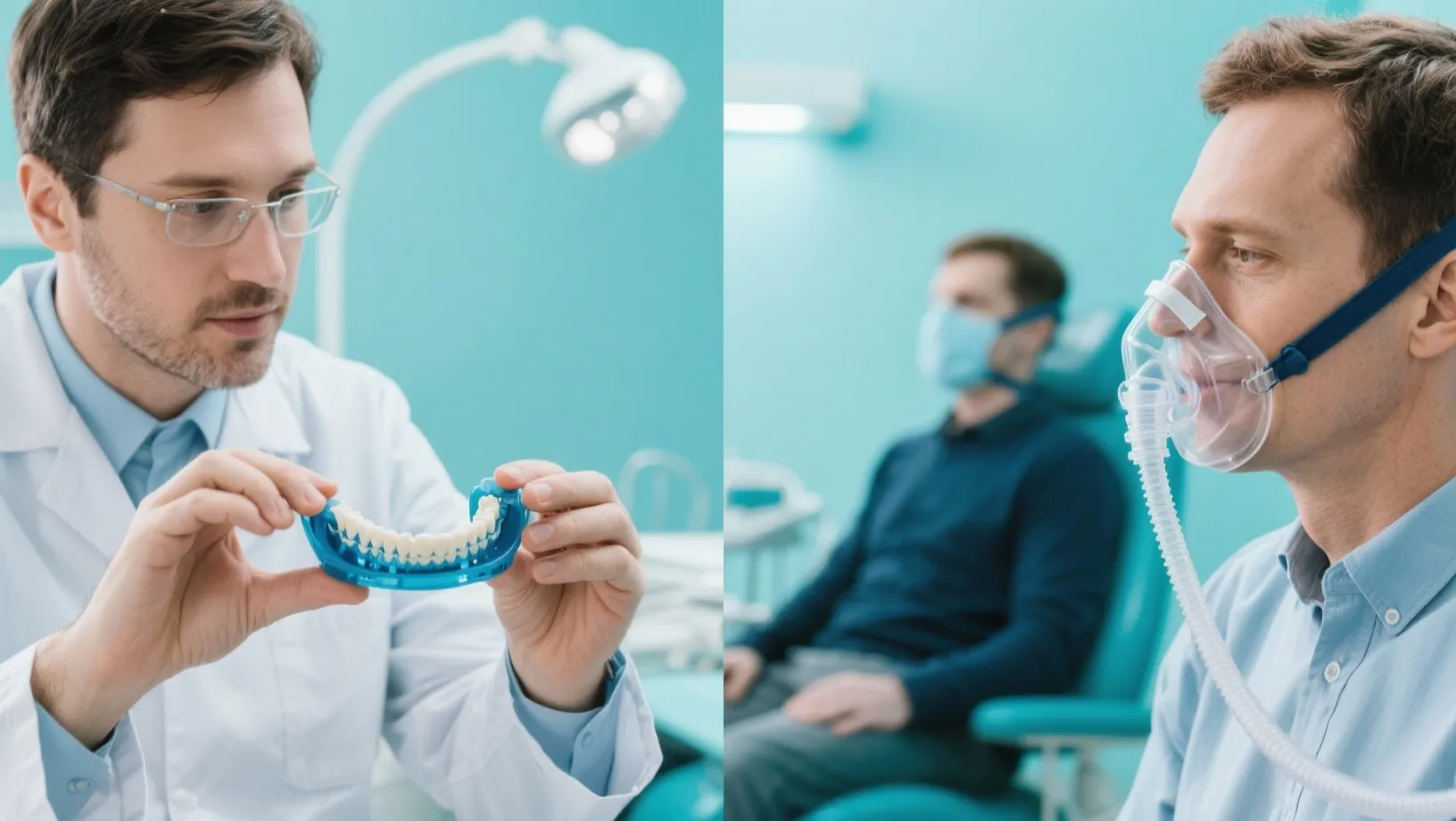
Tracking the right key performance indicators separates sleep dentistry practices that scale from those that stall. The most predictive metrics fall into four buckets: clinical efficacy, operational throughput, financial performance, and patient adherence. At minimum, a modern practice should monitor screen-to-study-to-appliance conversion, post-treatment AHI reduction, prior-authorization approval rate, and revenue per case. Together these KPIs translate dental sleep medicine from an opportunistic service line into a measurable, defensible clinical program.
The Screen to Study to Appliance Funnel
The most important operational KPI is the multi-stage conversion funnel that begins when a patient is screened with a validated instrument such as STOP-BANG or the Epworth Sleepiness Scale (ESS). Track three conversion rates: screened-to-referred for a home sleep apnea test (HSAT) or polysomnography, tested-to-diagnosed, and diagnosed-to-appliance-delivered. According to the American Academy of Sleep Medicine (AASM) and American Academy of Dental Sleep Medicine (AADSM) joint guideline, oral appliance therapy is appropriate for mild to moderate OSA and for severe OSA patients who fail CPAP. Healthy practices commonly see 60 to 75 percent of diagnosed candidates proceed to appliance delivery; rates below 40 percent usually signal a case-acceptance, insurance verification, or co-management bottleneck.
Clinical Efficacy: AHI Reduction and Symptom Scores
Your oral health is more important than you might realize. It's not just about having a bright smile, it's about maintaining your overall well-being. Regular dental check-ups, proper brushing and flossing, and a healthy diet can prevent many dental issues.
The AADSM defines treatment success for oral appliance therapy as an AHI reduction of at least 50 percent from baseline, with a stretch target of post-treatment AHI under 10 events per hour and resolution of symptoms. Every practice should run a post-titration efficacy HSAT and document the delta. Pair the apnea-hypopnea index with patient-reported outcomes: change in ESS score (a drop of three or more points is clinically meaningful per peer-reviewed literature including the Marshall et al. work in the Journal of Clinical Sleep Medicine), Functional Outcomes of Sleep Questionnaire (FOSQ-10), and bed partner reports of snoring. Aggregated efficacy data also strengthens negotiations with medical payers.
Prior Authorization and Payer Mix
Prior-authorization (PA) approval rate is one of the strongest early-warning signals of revenue cycle health. Best-in-class practices document approval rates above 85 percent for CPT-aligned medical billing under HCPCS code E0486, supported by a Letter of Medical Necessity, the sleep study report, and CPAP intolerance documentation where applicable. Track first-pass approval rate, average days to authorization, and denial reasons. Payer mix matters too. A practice that is 90 percent Medicare may have stable but capped reimbursement; one with a balanced commercial-Medicare blend typically shows higher revenue per case but greater administrative burden.
Operational and Lab KPIs
Remake rate and time-to-delivery quantify the quality of clinical records and lab workflow. AADSM-aligned practices target remake rates under five percent and time from impression or intraoral scan to delivery under three weeks. Higher remake rates almost always correlate with analog PVS impressions, unverified bite registrations, or lab miscommunication. Practices adopting digital scanning typically see remake rates fall by half within twelve months, based on internal practice benchmarks and case series reported at AADSM annual meetings.
Financial KPIs
Revenue per delivered case, collection rate, and days in accounts receivable are non-negotiable. National benchmarks for dental sleep cases billed medically range from roughly USD 2,500 to 4,500 per case depending on payer mix and region. Track gross production, net collections, write-offs, and the cost per acquired patient. Practices should also monitor referral source attribution: which sleep physicians, primary care offices, or digital channels actually produce delivered cases versus mere consultations.
Patient Adherence and Long-Term Follow-Up
Adherence drives outcomes and reputation. Self-reported wear time, supplemented by sensor-equipped appliances such as DentiTrac-enabled devices where available, is increasingly the standard. The AADSM recommends follow-up at delivery, two to four weeks for titration, three months for efficacy testing, and annually thereafter. Track annual recall completion rate and five-year retention. Patients lost to follow-up are clinical and financial liabilities; those retained generate referrals.
Key Takeaways
- The screen-to-study-to-appliance funnel is the single most diagnostic operational KPI.
- AHI reduction of at least 50 percent and post-treatment AHI under 10 are the AADSM benchmarks for efficacy.
- Prior-auth approval rate above 85 percent and remake rate under five percent indicate a mature workflow.
- Revenue per case, payer mix, and days in AR define the financial health of a sleep dentistry program.
- Long-term adherence and annual recall are leading indicators of five-year practice growth.
Frequently Asked Questions
Q: What is the most important KPI for a new sleep dentistry program?
A: The diagnosed-to-appliance conversion rate. It reveals whether case acceptance, insurance verification, and clinical workflow are functioning together.
Q: How do I measure AHI reduction in practice?
A: Compare the baseline sleep study to a post-titration efficacy HSAT performed with the appliance in place, following AASM scoring criteria.
Q: What is a healthy prior-authorization approval rate?
A: Practices billing medically under E0486 should target above 85 percent first-pass approval with clean documentation.
Q: How often should adherence be reviewed?
A: Per AADSM guidance, at delivery, during titration, at three months, and annually thereafter, ideally with objective sensor data.
Q: Are sensor-equipped appliances worth the investment?
A: For practices managing severe OSA patients or working with insurers requiring objective adherence data, yes. Sensors also reduce medico-legal ambiguity.
Final Thoughts
The future of sleep dentistry belongs to practices that treat data as a clinical asset. A dashboard combining conversion funnel metrics, AHI reduction, prior-auth performance, and adherence transforms anecdote into evidence. As payers and referring sleep physicians demand more rigor, practices that can demonstrate outcomes will win referrals and reimbursement. Begin with five core KPIs, review them monthly, and let the numbers guide every workflow decision.

Need help ?
Schedule your initial consultation today and start your journey towards a pain-free, healthier smile. Contact us now!
Blog Suggestions
How is AI changing sleep apnea diagnosis and oral appliance therapy?
FDA-cleared algorithms auto-score HSATs, computer vision reads intraoral scans, and predictive models forecast titration endpoints — accelerating diagnosis and treatment design.
What is HL7 FHIR, and why does it matter for dental sleep medicine?
HL7 FHIR is the modern healthcare data standard that lets clinical systems exchange information through web-friendly APIs instead of faxes and PDFs.

How will 3D intraoral scanning replace traditional impressions for sleep appliances?
3D intraoral scanning is on track to replace PVS impressions this decade: patients prefer scans, labs prefer STL files, and remake economics increasingly favor digital.
What does a fully digital sleep dentistry workflow look like in 2026?
A fully digital sleep dentistry workflow in 2026 spans HL7 FHIR referrals, online intake, intraoral scanning, AI-assisted lab handoff, titration apps, integrated HSAT, and automated billing.