
The Patient Who Walks In With a Smartwatch Screenshot
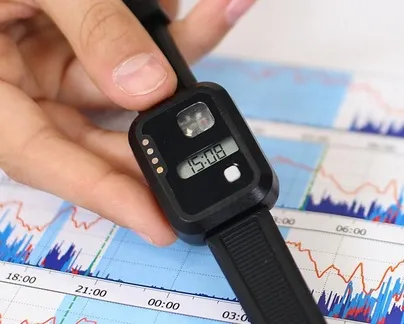
The patient who walks in with a smartwatch screenshot is now a routine part of dental practice, not a curiosity. When we first wrote about the Apple Watch and sleep tracking in 2018, consumer sleep data was a novelty that occasionally prompted a question. Since then, the FDA has cleared sleep apnea notification features on mainstream consumer wearables, and millions of devices actively flag possible breathing disturbances to their owners. Those owners bring the notification to whichever clinician they see next, and that is frequently the dentist. Handling that conversation well is a screening opportunity. Handling it poorly damages credibility in both directions.
What Consumer Sleep Apnea Features Actually Detect
Understanding the mechanism prevents both over-reading and dismissal. Current consumer sleep apnea notification features generally work by using accelerometer data to detect small movements associated with interruptions in normal respiration, accumulated over multiple nights, and flagging a pattern consistent with moderate-to-severe sleep apnea. Some devices supplement with pulse oximetry and heart rate variability.
What this means clinically:
Your oral health is more important than you might realize. It's not just about having a bright smile, it's about maintaining your overall well-being. Regular dental check-ups, proper brushing and flossing, and a healthy diet can prevent many dental issues.
- The feature is designed to detect a pattern over an extended period, typically flagging after multiple nights of data rather than reacting to a single night.
- It is generally tuned toward moderate-to-severe disease. A negative notification does not exclude mild OSA, and patients frequently misread the absence of an alert as a clean bill of health.
- It does not produce an AHI. Consumer devices do not measure apnea-hypopnea index in the way a scored sleep study does, and any number displayed is not equivalent to a diagnostic AHI.
- Cleared consumer features are indicated to notify users of possible signs of sleep apnea, not to diagnose it. The regulatory language is deliberately narrow, and clinicians should mirror it.
- Separately, generic sleep-stage graphs on wearables have modest agreement with polysomnography for staging. Total sleep time estimates are reasonably useful; deep-sleep and REM breakdowns should not drive clinical decisions.
The honest summary for a patient: it is a reasonable prompt to get properly evaluated, and it is not a diagnosis in either direction.
Why This Belongs in the Dental Chair
Dentists see patients more frequently than most physicians see asymptomatic adults, and dental examination already surfaces the relevant risk markers: scalloped tongue borders, a Mallampati or Friedman classification suggesting crowded oropharynx, tonsillar hypertrophy, bruxism wear facets, gastroesophageal reflux erosion, and a retrognathic profile. A patient volunteering a smartwatch notification hands the practice an opening that normally requires prompting. Ignoring it, or responding with a vague "you should mention that to your doctor," wastes the opening and signals that the practice has no competence in the area.
The Intake Script
The goal is to convert a consumer notification into a validated screening result and, where indicated, a physician referral. Keep it short and structured.
Opening acknowledgement:
"Thanks for bringing that in. Those notifications are designed to flag a pattern that might be sleep apnea. They are not a diagnosis, but they are a legitimate reason to look into it properly. Can I ask you a few questions?"
Clarify the data:
- "How long has your watch been flagging this — was it a one-time notification or has it repeated?"
- "Do you know if you had the sleep apnea feature enabled the whole time, or did you turn it on recently?"
- "Has anything changed recently — weight, alcohol before bed, new medications, sleeping position?"
Run the validated instrument. The notification is the prompt; the screening tool is the record. STOP-BANG is the practical choice in a dental setting:
- "Do you snore loudly enough to be heard through a closed door?"
- "Do you often feel tired, fatigued, or sleepy during the daytime?"
- "Has anyone observed you stop breathing during your sleep?"
- "Do you have or are you being treated for high blood pressure?"
- Plus BMI over 35, age over 50, neck circumference, and sex.
Add an Epworth Sleepiness Scale where daytime sleepiness is reported, since it gives a baseline for later comparison.
Clinical examination, narrated:
"I'm going to look at your airway, tongue, and the wear on your teeth, because those often show signs that fit with this."
The handoff:
"Based on the notification and this screening, I think it is worth getting an actual sleep test. That is a physician's call and a physician's diagnosis, not mine. What I can do is send my screening findings to your doctor, or refer you to a sleep physician directly. If a test confirms sleep apnea, then there is a conversation about treatment options, and an oral appliance is one of them — but that comes after the diagnosis, not before."
The negative-notification patient:
"Your watch not flagging anything is somewhat reassuring, but these features are tuned to catch moderate to severe patterns. Given what I'm seeing in your airway and the symptoms you're describing, I'd still suggest an evaluation."
Documentation and Scope
Record what the patient reported, the screening instrument used and its score, the clinical findings, and the referral made. Do not record the watch data as a diagnostic finding or transcribe device-reported numbers into the chart as though they were measured AHI values. Screening and referral are squarely within dental scope; diagnosis is not. Practices that keep that line visible in their documentation and in their language to patients avoid both scope problems and the credibility damage that comes from overclaiming.
Key Takeaways
- Consumer sleep apnea notifications flag a pattern consistent with moderate-to-severe OSA; they do not diagnose and do not produce a true AHI.
- A negative notification does not exclude mild OSA, and patients commonly misinterpret it as reassurance.
- Convert the notification into a validated screening result using STOP-BANG plus Epworth, and document that rather than the device data.
- Pair screening with the airway and wear findings a dental examination already produces.
- Refer for physician diagnosis; discuss appliance therapy only after a diagnosis exists.
Frequently Asked Questions
Q: Can a smartwatch notification substitute for a sleep study?
A: No. Cleared consumer features notify users of possible signs of sleep apnea. Diagnosis requires an interpreted home sleep apnea test or polysomnogram.
Q: A patient's watch shows very little deep sleep. Is that meaningful?
A: Not for clinical decisions. Consumer sleep staging has modest agreement with polysomnography. Total sleep time is the more useful figure.
Q: Should we screen patients whose watch shows nothing?
A: Yes, if clinical findings or symptoms suggest risk. The feature is tuned toward more severe disease and will miss milder cases.
Q: Can the dentist order the sleep test?
A: This varies by state and by payer. Even where permitted, diagnosis and interpretation belong to a physician, and co-management is the defensible pathway.
Q: How do we avoid seeming dismissive of the patient's device?
A: Treat it as a valid prompt that deserves a proper evaluation. Patients react badly to dismissal and equally badly to overclaiming.
Final Thoughts
Consumer sleep tracking moved from novelty to mainstream faster than most clinical workflows adapted. The practices that benefit are the ones with a script ready: acknowledge the data, explain its actual limits honestly, run a validated screen, examine the airway, and refer for diagnosis. That sequence takes a few minutes, respects the boundary between screening and diagnosis, and converts a patient's curiosity about a notification into a properly diagnosed and treated airway.

Need help ?
Schedule your initial consultation today and start your journey towards a pain-free, healthier smile. Contact us now!
Blog Suggestions
COMISA: When Appliance "Non-Compliance" Is Untreated Insomnia
The clinical signature that distinguishes conditioned insomnia from appliance failure, how to screen for it chairside, and when to co-refer for CBT-I.

Pediatric Airway Screening at the Hygiene Recall: A Protocol
A four-step screening protocol for every pediatric recall — caregiver questions, extraoral observation, intraoral airway examination, and validated instruments — plus referral pathways and what to say.

Five-Year Occlusal Change With Oral Appliance Therapy
Occlusal change is expected, not a complication of poor technique. Monitoring with baseline records, documenting change, mitigation strategies, and having the conversation before the patient notices.
MAD-FIT, Seven Years On
A data-led update to the 2019 augmented intelligence post: what titration data says about first-night efficacy, reduced follow-up burden, and the honest limits of clinical prediction.