
Letter of Medical Necessity for an Oral Appliance: Template and Checklist
A letter of medical necessity for an oral appliance is a signed statement from the treating physician explaining why a custom mandibular advancement device is needed for this patient. It must name the diagnosis and ICD-10 code, the sleep study result with a numeric index, the patient's symptoms, the CPAP history, and the specific device requested under HCPCS E0486. Letters that state a conclusion without the supporting facts are the ones that get denied.
What Is a Letter of Medical Necessity?
A letter of medical necessity, usually shortened to LMN, is the document a payer uses to decide whether a requested item meets its coverage policy. For oral appliance therapy it connects three things the reviewer needs to see together: a qualifying diagnosis, a clinical reason this patient needs this device, and an order from a physician. It travels with the prior authorization request and again with the claim.
Who Writes and Signs It?
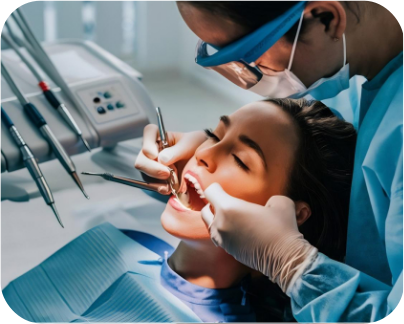
Your oral health is more important than you might realize. It's not just about having a bright smile, it's about maintaining your overall well-being. Regular dental check-ups, proper brushing and flossing, and a healthy diet can prevent many dental issues.

The physician who evaluated the patient and ordered the appliance signs the letter. For Medicare, the order and the determination of medical necessity must come from the treating physician, not from the dentist supplying the device. In practice the dental office often prepares a draft, because the dental team holds the device details and knows what the payer asks for, and the physician reviews, edits, and signs it. That division works well as long as every clinical statement in the letter is supported by the physician's own notes.
What Must the Letter Include?
Reviewers work from a checklist. A letter that answers each item in order is approved faster than one that makes the reviewer search.
- Patient name, date of birth, and insurance member ID.
- Date of the physician's face-to-face evaluation.
- Diagnosis in words and as an ICD-10 code, most often G47.33 for obstructive sleep apnea.
- Sleep study type, date, and the numeric AHI or RDI. Include the lowest oxygen saturation if it strengthens the case.
- Symptoms and related conditions, such as excessive daytime sleepiness with an Epworth score, hypertension, or a history of stroke.
- CPAP history. State whether it was tried, for how long, and exactly why it failed, or state that it is contraindicated or was declined after counseling.
- The device requested, described as custom fabricated and titratable, with HCPCS code E0486.
- The expected benefit and the plan for follow-up testing.
- The physician's signature, printed name, credentials, NPI, and the date.
Letter of Medical Necessity Template for an Oral Appliance
The wording below is a starting structure. Replace each bracketed item with the patient's actual information, and remove anything that does not apply.
Date: [date]
To: [payer name], Utilization Review
Re: [patient name], date of birth [date], member ID [number]
Request: Custom-fabricated mandibular advancement device, HCPCS E0486
Diagnosis: Obstructive sleep apnea, ICD-10 G47.33
I evaluated [patient name] in person on [date]. The patient reported [symptoms, for example loud snoring, witnessed apneas, unrefreshing sleep, and daytime sleepiness]. The Epworth Sleepiness Scale score was [score]. Relevant medical history includes [conditions, for example hypertension].
A [home sleep apnea test or in-lab polysomnogram] performed on [date] and interpreted by [physician name and credentials] showed an apnea-hypopnea index of [number] events per hour, scored using [3 percent or 4 percent] hypopnea criteria, with a lowest oxygen saturation of [number] percent. These findings confirm [mild, moderate, or severe] obstructive sleep apnea.
Positive airway pressure therapy was [tried from date to date and discontinued because of specific reasons, with adherence data showing average use of number hours per night, despite interventions such as mask refitting and humidification] or [discussed and declined by the patient after counseling on risks and alternatives] or [is contraindicated because of reason].
I am prescribing a custom-fabricated, titratable mandibular advancement device to treat this patient's obstructive sleep apnea. The device will be fabricated from a scan of the patient's dentition and fitted by [dentist name and credentials], who will adjust it incrementally and monitor for side effects. Treatment effectiveness will be confirmed with a follow-up sleep test with the appliance in place.
Without treatment, this patient remains at risk of [cardiovascular consequences, impaired daytime function, and accidents related to sleepiness]. In my clinical judgment this device is medically necessary.
Signed: [physician name, credentials, NPI, signature, date]
What Should Be Attached?
The letter summarizes the evidence. The attachments are the evidence.
- The full interpreted sleep study report, signed by the interpreting physician.
- The physician's visit note from the face-to-face evaluation.
- The written order or prescription for the appliance.
- CPAP adherence data or records of intolerance, where relevant.
- The dentist's examination notes confirming the patient is a suitable candidate.
- Any payer-specific form required for prior authorization.
What Gets a Letter Denied?
Most denials trace back to a short list of avoidable defects.
- No signature, or a signature with no date.
- A severity description with no numeric index.
- A severity stated in the letter that does not match the sleep study.
- CPAP intolerance described in one unsupported phrase.
- The device described generically, without the words custom fabricated and titratable.
- A letter signed by the dentist when the payer requires the physician.
- An evaluation date outside the window the payer accepts.
- Boilerplate that clearly was not written about this patient.
How Can a Practice Produce These Faster?
The slow part of an LMN is not the writing. It is gathering the inputs: the index from the sleep study, the Epworth score from intake, the CPAP history from the physician's note, the device details from the dental record. When those sit in different places, each letter takes half an hour and errors creep in during retyping.
The fix is structural. Capture each data point once, in a defined field, at the point it is first known, and generate the letter from those fields. Appnea is built on this principle, with auto-populated paperwork and an AI assistant that can draw clinical notes into a prior authorization request. The physician still reviews and signs every letter. What changes is that the draft arrives complete and consistent with the record, so review takes minutes.
Key Takeaways
- The treating physician signs the letter. The dental office can prepare the draft.
- Every letter needs the ICD-10 code, a numeric AHI or RDI, symptoms, CPAP history, and the device described as custom fabricated and titratable.
- Attach the full sleep study, the visit note, and the order.
- Mismatches between the letter and the sleep study are a leading cause of denial.
- Generating the letter from structured patient data saves time and reduces errors.
Frequently Asked Questions
Q: Can a dentist write a letter of medical necessity for an oral appliance?
A: A dentist can prepare it, but for Medicare and most medical payers the treating physician must make the medical necessity determination and sign.
Q: Is a letter of medical necessity the same as a prescription?
A: No. The prescription is the order for the device. The letter explains why the device is needed. Payers usually want both.
Q: Does every payer require one?
A: Not always, but most require equivalent information for prior authorization. Having a complete letter ready avoids delays.
Q: How long should the letter be?
A: One page is usually enough. Reviewers want specific facts in a predictable order, not length.
Q: What if the patient never tried CPAP?
A: State that clearly, with the reason. Patient preference after counseling, or a contraindication, should be documented in the physician's note.
Final Thoughts
A letter of medical necessity is not a persuasive essay. It is a structured answer to the questions a reviewer is required to ask. Practices that treat it that way, with the same fields in the same order drawn from the same record every time, see fewer denials and spend far less time on each case. The template above is a starting point. Adapt it to each payer's policy, and make sure every statement in it can be found in the chart.

Need help ?
Schedule your initial consultation today and start your journey towards a pain-free, healthier smile. Contact us now!
Blog Suggestions
How to Fill Out the CMS-1500 Form for an Oral Appliance Claim
A box-by-box guide to the CMS-1500 for dental practices billing E0486: ordering physician, diagnosis G47.33, prior authorization number, modifiers, place of service, and the errors that get claims rejected.
Dental Sleep Medicine Software: What to Look For Before You Buy
Why general dental software falls short for sleep cases, the twelve capabilities a dental sleep medicine platform should have, what AI features should actually do, and the questions to ask any vendor.

Dental Insurance Verification Software: What Changes When You Bill Medical
Oral appliances are billed to medical insurance, so verifying the dental plan is not enough. What to verify before a sleep case, what real-time eligibility cannot tell you, and the software features that matter.

Digital Patient Intake Forms for a Dental Sleep Practice
Why paper intake fails for sleep cases, what a digital sleep intake should capture, the features that get patients to finish forms before the visit, and how intake data feeds verification, referral, and claims.