
Can Mandibular Advancement Devices (MADs) Cause or Worsen TMJ Problems in Sleep Apnea Patients?

Background: Understanding the MAD–TMD Connection
Obstructive Sleep Apnea Syndrome (OSAS) is a common sleep-related breathing disorder often managed with Continuous Positive Airway Pressure (CPAP) or Mandibular Advancement Devices (MADs).
While CPAP is considered the gold standard, it can be cumbersome or uncomfortable for some patients. MADs, which are compact oral appliances that reposition the jaw forward to maintain airway patency, are increasingly favored as a non-invasive alternative.
However, because MADs act by advancing the mandible during sleep, clinicians and researchers have questioned whether long-term use might cause or aggravate Temporomandibular Disorders (TMDs)—conditions that affect the jaw joint (TMJ) and surrounding muscles.
Your oral health is more important than you might realize. It's not just about having a bright smile, it's about maintaining your overall well-being. Regular dental check-ups, proper brushing and flossing, and a healthy diet can prevent many dental issues.
This systematic review, conducted according to PRISMA and Cochrane Handbook standards, investigates whether MAD therapy for OSAS is associated with the development or progression of TMD symptoms.
Objective of the Review
The study aimed to determine whether patients treated with MADs for OSAS experience:
🔹 New onset or exacerbation of temporomandibular disorders (TMDs)
🔹 Improvement in pre-existing TMD symptoms
Methodology Overview
A comprehensive literature search was conducted across seven databases: PubMed, Embase, Cochrane Library, Scopus, Web of Science, CINAHL, and PsycINFO.
The search used the Boolean and MeSH-based string:
(“Temporomandibular Disorders” OR “TMJ Disorders”) AND (“Obstructive Sleep Apnea”) AND (“Mandibular Advancement Devices” OR “Oral Appliance Therapy”).
🔹 Number of studies included: 13 (out of 497 screened)
🔹 Study designs: Randomized controlled trials (RCTs), prospective, and retrospective cohort studies
🔹 Assessment tool for quality: RoB-2 (Risk of Bias tool)
🔹 Follow-up duration across studies: 2 months to 5 years
🔹 Sample sizes: Ranged from 14 to 167 participants
🔹 MAD types studied: Monobloc, hard acrylic, heat-cured, split-type, and adjustable appliances
Key Findings
TMD Symptoms Rarely Worsen with MAD Use
Most studies reported that MAD therapy did not worsen TMD symptoms.
In a few cases, patients experienced mild jaw pain or clicking early in treatment, but these symptoms typically subsided as they adapted to the device.
Some Studies Reported Improvement
Four studies demonstrated a significant reduction in TMD severity and frequency, suggesting that improved airway function and reduced nocturnal clenching may indirectly alleviate TMD symptoms.
MAD Use Was Not Discontinued Due to TMD
Across all reviewed studies, no patient discontinued MAD therapy due to jaw-related pain or dysfunction.
This indicates that, while mild discomfort may occur initially, MAD therapy is clinically well tolerated over time.
Long-Term Stability of TMJ Health
Studies with extended follow-up periods (up to 5 years) found no significant long-term increase in TMD incidence.
In other words, chronic TMJ problems are unlikely to arise solely from continued MAD use.
Factors Influencing Study Variability
Differences in study outcomes can be attributed to:
🔹 Variation in MAD design (monobloc vs. titratable or custom-fit)
🔹Non-uniform diagnostic criteria (e.g., RDC/TMD, questionnaires, MRI, EMG)
🔹 Duration of follow-up
🔹 Sample demographics, such as the predominance of male participants
Because OSAS is more prevalent in men and TMDs occur more frequently in women, gender imbalance across samples may have influenced results.
Clinical Implications
For dentists and sleep specialists managing OSAS:
🔹 MADs remain a safe and effective alternative for mild-to-moderate OSA patients who are intolerant to CPAP.
🔹 Early TMJ discomfort is often transient and manageable through gradual mandibular advancement.
🔹 Regular follow-up appointments are essential to monitor bite alignment, jaw comfort, and device fit.
🔹 Custom fitting and progressive adjustment of the device help minimize strain on the masticatory system.
🔹 Patients with skeletal Class III malocclusion may not be ideal candidates for MAD therapy due to inherent jaw discrepancies.
Limitations of the Evidence
Despite rigorous methodology, the review acknowledges several limitations:
🔹 Heterogeneity in study design, assessment methods, and device types
🔹 Small sample sizes in several studies
🔹 Inconsistent or subjective symptom reporting
🔹Variable follow-up durations, limiting assessment of long-term outcomes
Consequently, while the evidence supports MAD safety, further standardized, long-term studies are needed for more definitive conclusions.
Conclusion
The collective evidence indicates that Mandibular Advancement Device (MAD) therapy for Obstructive Sleep Apnea does not significantly increase the risk of developing or worsening Temporomandibular Disorders (TMDs).
Some studies even show symptomatic improvement, suggesting potential secondary benefits from enhanced sleep and reduced nocturnal stress.
Overall, when fitted properly and monitored regularly, MADs remain a safe, effective, and well-tolerated long-term treatment option for OSAS patients.
Reference
Langaliya, A., Alam, M. K., Hegde, U., Panakaje, M. S., Cervino, G., & Minervini, G. (2023). Occurrence of Temporomandibular Disorders among patients undergoing treatment for Obstructive Sleep Apnoea Syndrome (OSAS) using Mandibular Advancement Device (MAD): A Systematic Review conducted according to PRISMA guidelines and the Cochrane handbook for systematic reviews of interventions.
Journal of Oral Rehabilitation. DOI: 10.1111/joor.13574

Need help ?
Schedule your initial consultation today and start your journey towards a pain-free, healthier smile. Contact us now!
Blog Suggestions
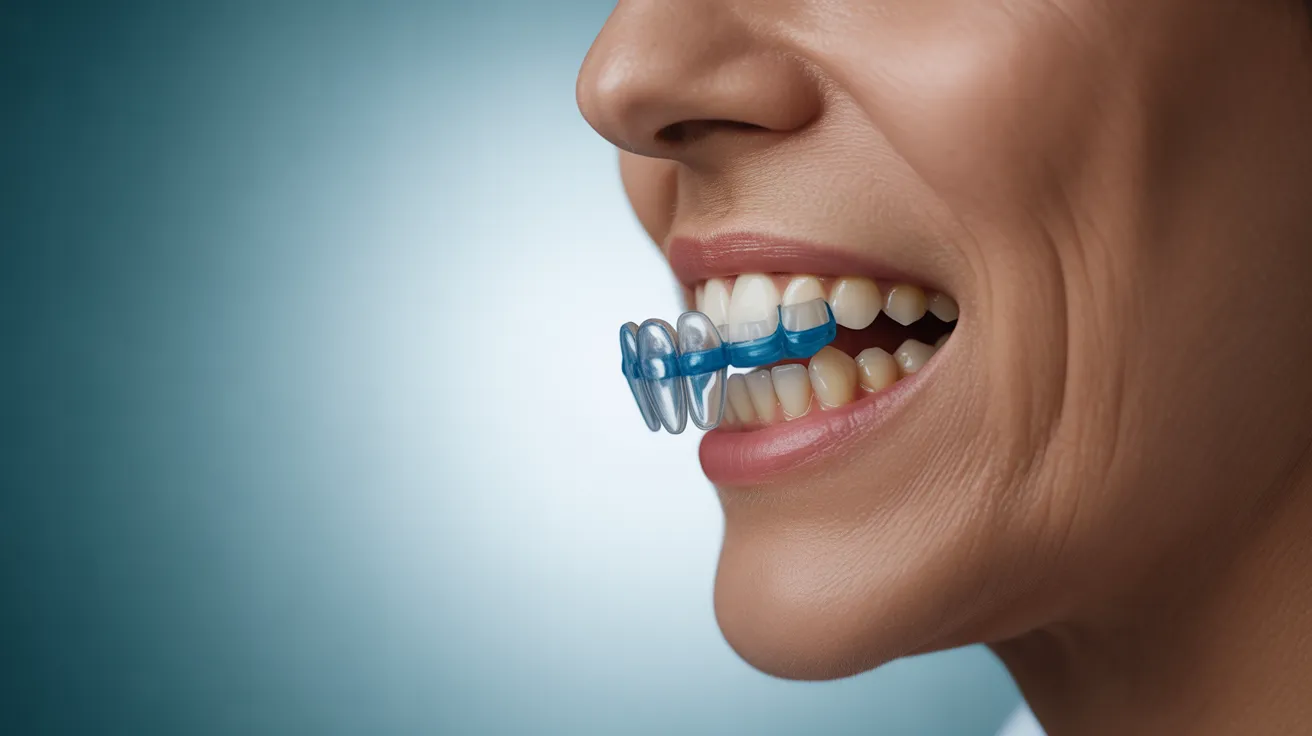
TMD in OSAS Patients
The pathophysiology of OSAS involves a combination of anatomical factors such as a narrowed pharyngeal airway, increased collapsibility of soft tissues and reduced neuromuscular tone.
How Oral Health Could Be a Hidden Key to Protecting Your Brain & Heart
People with poor oral health (gum disease + cavities) also had a 36% higher risk of major cardiovascular events (like heart attack, fatal heart disease) vs. those with good oral health.
The Overlooked Connection Between Oral Health and Cancer
When we think of oral health, the mind often jumps to cavities, gum disease, or bad breath. But emerging evidence suggests that the health of our mouth is deeply linked to our overall systemic well-being — including the risk of developing cancer.
The Connection Between Nutrition and Oral Health
As dental professionals, we understand that oral health is not just about cleanings and checkups — it’s a reflection of a patient’s overall well-being. While daily brushing, flossing, and regular exams remain the foundation of preventive care, there’s another essential piece of the puzzle that often goes underappreciated: nutrition.