
What is HL7 FHIR, and why does it matter for dental sleep medicine?
HL7 FHIR is the modern healthcare data standard that allows clinical systems to exchange information through web-friendly APIs instead of faxes and PDFs. For dental sleep medicine, this matters because the workflow today is uniquely interoperability-poor: most dentists still receive polysomnogram reports by fax or scanned PDF, retype findings, and lack any structured channel to send efficacy data back to the referring sleep physician. FHIR R4 and the emerging R5 release change that. Adopting FHIR-aligned tools is now a near-term competitive advantage.
What HL7 FHIR Actually Is
FHIR (Fast Healthcare Interoperability Resources) is an HL7 International standard that defines clinical concepts as modular resources delivered over RESTful APIs in JSON or XML. The current production version is R4, with R5 published and gradually being adopted. Unlike the older HL7 v2 messaging or CDA documents, FHIR is designed for the web: each resource has a stable URL, predictable structure, and can be combined into Bundles for richer clinical context. Sleep MDs, dentists, labs, and payers can all read and write the same vocabulary.
Why Dental Sleep Workflows Are Behind
Your oral health is more important than you might realize. It's not just about having a bright smile, it's about maintaining your overall well-being. Regular dental check-ups, proper brushing and flossing, and a healthy diet can prevent many dental issues.
Dental sleep medicine sits at the seam between dentistry and medicine, each with separate record systems, billing codes, and regulatory expectations. Sleep studies live in pulmonary or neurology systems; appliance records live in dental practice management software like Dentrix or Eaglesoft. The result is a fax-driven workflow that loses data, delays prior authorization, and frustrates referring physicians. The ONC Cures Act Final Rule and the CMS Interoperability and Patient Access Rule now require certified EHRs to expose FHIR APIs, which means the upstream sleep data is increasingly available, even if downstream dental software has not yet caught up.
FHIR Resources That Matter for OAT
A handful of FHIR resources cover most dental sleep medicine use cases. DiagnosticReport carries the sleep study interpretation. Observation holds discrete values such as AHI, oxygen desaturation index, mean and nadir SpO2, and Epworth Sleepiness Scale scores. ServiceRequest represents the referral for oral appliance therapy. DocumentReference attaches the original PSG or HSAT PDF. Condition carries the OSA diagnosis with ICD-10 codes G47.33 or similar. Coverage and Claim resources support medical billing workflows aligned with HCPCS code E0486.
USCDI and Regulatory Drivers
The United States Core Data for Interoperability (USCDI) is the federal data class set that certified EHRs must support. USCDI v3 added clinical notes and care team members; USCDI v4 continues to expand the dataset, with sleep-relevant observations increasingly represented. The ONC HTI-1 Final Rule reinforces this trajectory. For dental practices, the practical takeaway is that sleep-medicine partners will soon expect to send and receive structured FHIR data, not faxes.
Practical Near Term Wins
Three concrete wins are available today. First, structured intake: a FHIR-aware intake portal can pre-fill demographics, problem list, and medications from a patient-authorized EHR connection through SMART on FHIR. Second, automated PSG ingestion: a FHIR client can read the DiagnosticReport and Observation resources from the referring sleep MD's EHR, dropping baseline AHI directly into the dental chart. Third, closed-loop efficacy reporting: post-titration HSAT findings can be sent back to the sleep MD as a structured DiagnosticReport, replacing the faxed letter and strengthening the referral relationship.
Security and HIPAA Considerations
FHIR APIs are typically secured via OAuth 2.0 and SMART on FHIR profiles. All exchanges remain governed by HIPAA, and Business Associate Agreements with any FHIR-enabled vendor are non-negotiable. The standard does not relax privacy expectations; it makes structured exchange feasible within them.
Key Takeaways
- HL7 FHIR R4 is the production standard for modern healthcare interoperability.
- Dental sleep workflows remain fax-driven and lose data at every handoff.
- Key FHIR resources for OAT include DiagnosticReport, Observation, ServiceRequest, and DocumentReference.
- ONC and CMS rules now mandate FHIR APIs in certified EHRs, opening upstream sleep data.
- SMART on FHIR enables secure patient-authorized data exchange under HIPAA.
Frequently Asked Questions
Q: Do I need to be a developer to use FHIR?
A: No. The expectation is that practice management vendors and middleware partners expose FHIR capabilities; clinicians need to ask the right procurement questions.
Q: Does my dental practice management software already support FHIR?
A: Most dental PMS systems do not natively support FHIR yet. Bridge vendors and dental-medical integration platforms increasingly fill the gap.
Q: Is FHIR HIPAA compliant by default?
A: FHIR is a data standard, not a compliance program. Use of FHIR must be wrapped in HIPAA-aligned security, BAAs, and access controls.
Q: Can I receive a sleep study electronically today?
A: Often yes, if the sleep lab uses a certified EHR. Ask the lab whether they can share via a SMART on FHIR connection or a direct API integration.
Q: What is the difference between FHIR R4 and R5?
A: R5 refines and expands R4 with additional resources and constraints. R4 remains the production baseline most regulations reference.
Final Thoughts
Dental sleep medicine is one of the last clinical workflows still dependent on faxes, and that gap is closing fast. Practices that ask their PMS vendors, sleep MD partners, and labs about FHIR readiness today will be the ones offering frictionless referrals tomorrow. Interoperability is no longer an IT topic; it is a clinical experience and growth lever. The faxed PSG report has a finite future, and the practices that prepare for that will lead the next decade of dental sleep medicine.

Need help ?
Schedule your initial consultation today and start your journey towards a pain-free, healthier smile. Contact us now!
Blog Suggestions

How will 3D intraoral scanning replace traditional impressions for sleep appliances?
3D intraoral scanning is on track to replace PVS impressions this decade: patients prefer scans, labs prefer STL files, and remake economics increasingly favor digital.
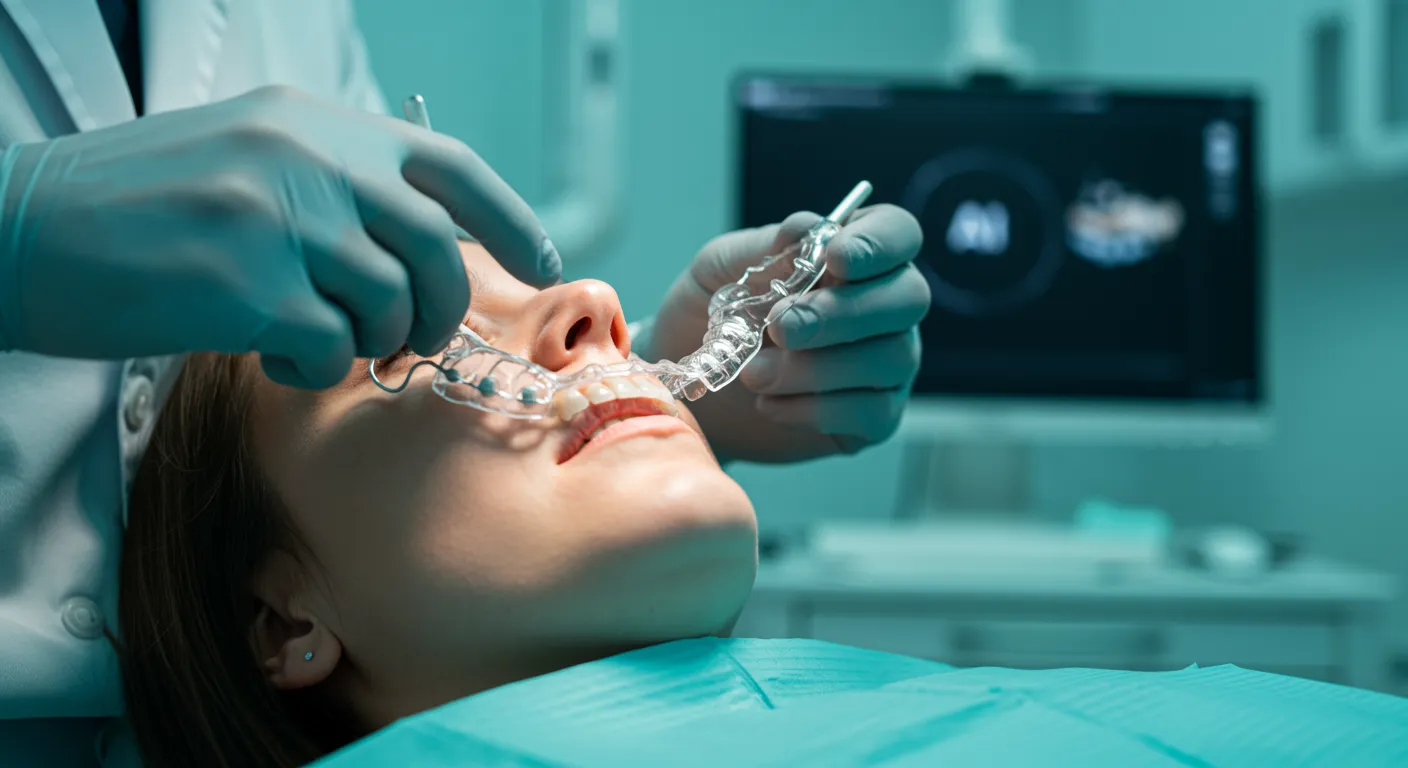
What does a fully digital sleep dentistry workflow look like in 2026?
A fully digital sleep dentistry workflow in 2026 spans HL7 FHIR referrals, online intake, intraoral scanning, AI-assisted lab handoff, titration apps, integrated HSAT, and automated billing.

Obstructive Sleep Apnea Warning Signs, and How to Know If You Have It
Many people think snoring is harmless. But loud snoring, daytime fatigue, and poor sleep quality can be signs of Obstructive Sleep Apnea (OSA). Here's how to recognize the warning signs and know when to see a sleep specialist.

CPAP vs. oral appliance: which sleep apnea treatment is right for you?
CPAP and custom oral appliances are the two first-line OSA therapies. CPAP lowers AHI more powerfully, while oral appliances win on real-world adherence and comfort.