
Before You Upload a Patient Photo to an AI Tool

Before you upload a patient photo to an AI tool, establish whether that vendor will sign a business associate agreement. A clinical photograph of an identifiable patient, uploaded to a third-party service for analysis, is a disclosure of protected health information. Under HIPAA, that disclosure requires a business associate agreement (BAA) with the receiving vendor. Most general-purpose consumer AI tools will not sign one. Uploading to them is a reportable breach, regardless of how useful the output is or how private the interface feels.
Why This Is Different From Other Software
Practices have long-established instincts about practice management software and imaging systems, both of which are procured through vendors who understand healthcare compliance. Consumer AI tools broke that pattern because they are trivially accessible, free or nearly free, and used from a phone without any procurement process. A clinician photographing a patient's airway and uploading it for a second opinion is doing something that feels like looking something up, and is legally equivalent to faxing the chart to an uncontracted third party.
Three specific properties make AI tools higher risk than typical cloud software. Inputs may be retained and used for model training unless contractually excluded. Data may be processed in jurisdictions not specified to the covered entity. And the vendor may have subprocessors — infrastructure providers, model providers — whose handling of the data the practice cannot see.
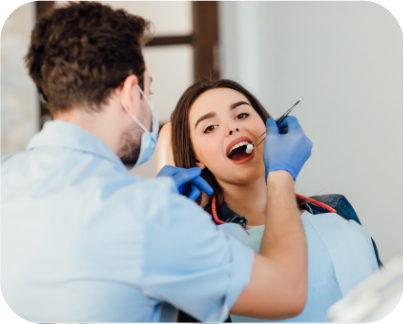
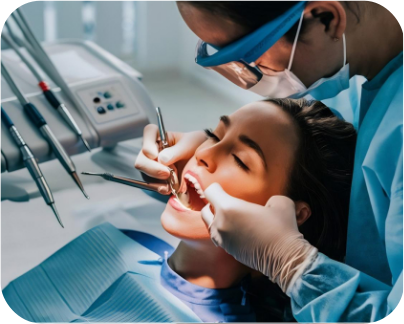
Your oral health is more important than you might realize. It's not just about having a bright smile, it's about maintaining your overall well-being. Regular dental check-ups, proper brushing and flossing, and a healthy diet can prevent many dental issues.
What Counts as PHI in a Clinical Photo
Practices routinely underestimate identifiability. PHI is not only a name attached to a file.
- Facial photographs are explicitly identifiable, including profile views used for craniofacial assessment.
- Full-face and comparable images are one of the eighteen HIPAA identifiers, so cropping a name off a photograph does not de-identify it.
- Intraoral photographs combined with a date of service, an age, or a treatment context can be identifying in a small practice population.
- Dental radiographs are considered potentially identifiable, since dentition is used forensically for identification.
- Metadata embedded in image files frequently includes device identifiers, timestamps, and GPS coordinates, which can identify the practice location and the visit.
- Sleep study reports, titration records, and appliance photographs paired with any demographic detail are equally in scope.
Removing a patient's name from a filename is not de-identification, and the safe harbour de-identification standard is substantially more demanding than most clinicians assume.
The Questions to Ask a Vendor
Ask these before uploading anything, and get the answers in writing rather than from a marketing page.
- Will you sign a business associate agreement? This is the threshold question. If the answer is no, the conversation ends for any use involving PHI.
- Is our data used to train your models, or the models of any subprocessor? Require an explicit contractual exclusion, not a settings toggle that a staff member could change.
- What is your data retention period, and can we require deletion? Ask specifically whether deletion propagates to backups and to subprocessors, and on what timeline.
- Where is data processed and stored, geographically? Cross-border processing raises additional obligations and may conflict with state law.
- Who are your subprocessors, and do they have BAAs in place with you? A vendor that will sign a BAA but routes data to a model provider that will not has not solved the problem.
- Is the connection encrypted in transit and at rest, and to what standard?
- Do you support audit logging that shows which staff member uploaded what and when? Required for breach investigation and for the practice's own accounting of disclosures.
- What is your breach notification commitment and timeline? HIPAA requires business associates to notify covered entities; verify the contractual window.
- Do you carry cyber liability insurance, and at what limits?
- Have you completed a SOC 2 Type II audit or equivalent third-party assessment? Ask for the report, not the badge.
- What happens to our data if we terminate, or if you are acquired or cease operations?
- Is the tool's clinical output subject to FDA regulation, and if it is presented as a medical device, what is the clearance status?
Practical Rules for the Practice
Turn the analysis into standing policy rather than case-by-case judgement.
- Maintain an approved-tools list. Staff should not have to evaluate compliance in the moment. Name the tools with executed BAAs and state that nothing else receives patient data.
- Prohibit consumer AI tools for any clinical content, explicitly, in the practice's written policies. Include personal accounts on personal phones, which is where most violations actually occur.
- Strip metadata before any permitted upload, and train staff that cropping a face is not de-identification.
- Obtain patient authorisation for uses beyond treatment, payment, and operations — particularly if images may be used for marketing, publication, or vendor product improvement. Treatment use under a BAA does not require separate authorisation; marketing use does.
- Conduct and document a security risk analysis covering AI tools. This is a HIPAA Security Rule requirement and is among the first things requested in an investigation.
- Train annually and document it. Most breaches trace to a well-intentioned clinician, not a malicious actor.
Why This Doubles as Differentiation
Patients are increasingly aware that their data is a commodity, and sleep data is intimate — how someone breathes at night, images of their face and mouth, records of a chronic condition. A practice that can explain plainly which tools it uses, that those vendors are contractually bound, and that patient images are not training anyone's model, is saying something most competitors cannot. Referring physicians care about this too, because a dental practice mishandling PHI creates exposure for the referral source. Making data handling explicit in patient communication and in referral relationships is a genuine differentiator, and it costs nothing beyond doing the work properly.
Key Takeaways
- Uploading identifiable patient images to a vendor without a BAA is a disclosure of PHI and a reportable breach.
- Facial photographs are explicitly identifiable; cropping and filename changes do not de-identify.
- The threshold vendor question is whether they will sign a BAA; after that, ask about training use, retention, subprocessors, and breach notification.
- Maintain an approved-tools list so staff are not making compliance judgements in the moment.
- Document a security risk analysis covering AI tools; it is a Security Rule requirement.
Frequently Asked Questions
Q: Is it acceptable if the AI tool says data is private and not used for training?
A: Not on its own. A marketing statement is not a contract. The obligation must be in an executed BAA or equivalent agreement.
Q: What about an intraoral photo with no face visible?
A: Still treat it as PHI. Combined with date, age, or treatment context it is potentially identifiable, and dentition is forensically identifying.
Q: Can we use AI tools if we de-identify first?
A: Only if de-identification meets the HIPAA safe harbour or expert determination standard. That is a higher bar than removing a name, and full-face images cannot meet safe harbour.
Q: Does the practice or the vendor bear liability for a breach?
A: Both can. Covered entities retain obligations, and business associates are directly liable under HIPAA. A BAA allocates responsibility but does not eliminate the practice's exposure.
Q: What if a staff member already uploaded a patient photo to a consumer tool?
A: Treat it as a potential breach. Investigate scope, document it, conduct a risk assessment, and follow the breach notification rule if the assessment indicates it is required.
Final Thoughts
AI tooling has real clinical value in dental sleep medicine, and the answer is not to avoid it. The answer is to route it through the same procurement discipline that any other system touching patient data would face, which is a short list of questions and an executed agreement. The practices that get this wrong will not do so through malice; they will do so because a clinician wanted a quick second opinion on an airway photograph. That is exactly why the policy has to exist before the moment arrives.

Need help ?
Schedule your initial consultation today and start your journey towards a pain-free, healthier smile. Contact us now!
Blog Suggestions

Five Numbers Every Dental Sleep Practice Should Watch Monthly
Screen-to-test conversion, test-to-appliance conversion, days to delivery, titration visits per case, and collected per case — what each measures, what good looks like, and what to do when it moves.
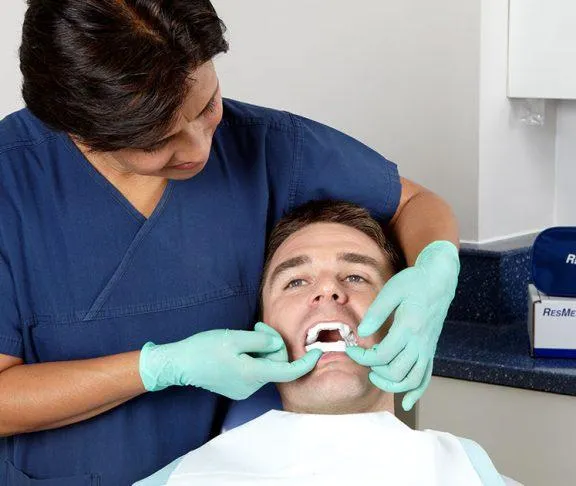
Sleep Apnea Mouth Guards: Do They Work, and Is Custom Worth It?
How a sleep apnea mouth guard works, what the AASM and AADSM guideline says, the real differences between custom and over-the-counter devices, typical costs, side effects, and the steps to getting one.
Types of Oral Appliances for Sleep Apnea and How to Choose
Mandibular advancement devices and tongue-retaining devices compared by design: push, pull, dorsal fin, anterior, and milled. Which designs meet Medicare E0486 requirements, and how to match the device to the patient.
Epworth Sleepiness Scale: How to Score It and What the Number Means
The eight Epworth questions, the 0 to 24 scoring bands, what a score of 11 or more means, what the scale cannot tell you about sleep apnea, and how to use it to document and track oral appliance therapy.