
When a Kid's Bad Behavior Is Actually a Hidden Sleep Disorder
A child comes in for a routine cleaning. The parent apologises before the appointment even starts, because the last visit was difficult and school has been worse. The child is restless in the chair, hard to redirect, quick to escalate. Everyone in the room reads this as behaviour. Almost nobody asks how the child breathes at night.
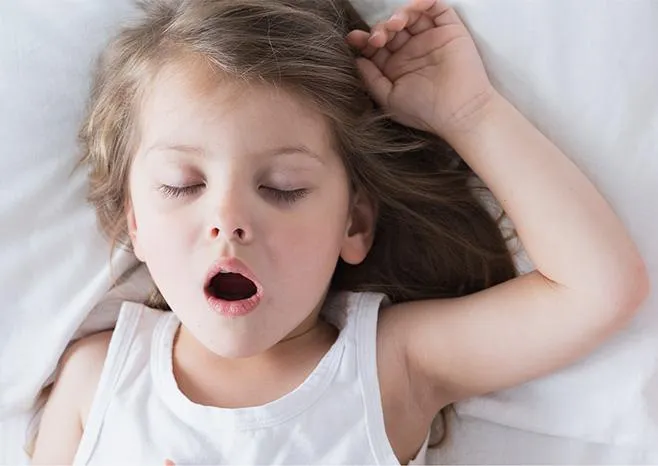
Sleep-disordered breathing in children, ranging from habitual snoring to pediatric obstructive sleep apnea, fragments sleep night after night without necessarily waking the child in any way a parent would notice. The developing brain never banks consolidated deep sleep, and the deficit surfaces the next day as hyperactivity, irritability, and poor concentration rather than as obvious tiredness. The presentation looks like a discipline problem. It can be a breathing problem.
The scale of this is not marginal. Habitual snoring is commonly reported in around one in ten children, and pediatric obstructive sleep apnea in an estimated one to five percent, with the majority undiagnosed. A general practice seeing pediatric patients on a normal recall schedule is therefore encountering these children routinely, whether or not the subject has ever come up in the chair.
This article covers why the behavioural presentation is so easy to miss, what a dental team can screen for during an ordinary pediatric visit, how to raise it with a parent without overstepping into diagnosis, and how to build the referral pathway that turns a chairside observation into a treated child.
Your oral health is more important than you might realize. It's not just about having a bright smile, it's about maintaining your overall well-being. Regular dental check-ups, proper brushing and flossing, and a healthy diet can prevent many dental issues.
Why Sleep-Deprived Children Look Wired Rather Than Tired
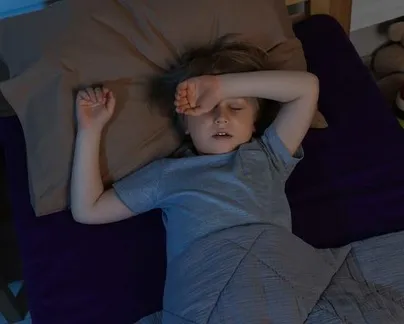
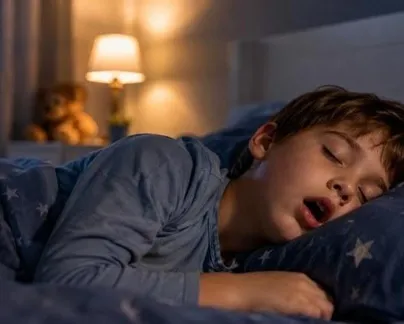
This is the single most counterintuitive fact in pediatric sleep, and it is the reason the problem hides in plain sight. An adult running on fragmented sleep slows down. A child frequently does the opposite, becoming louder, faster, more impulsive, and less able to sit still, as though the nervous system were compensating for the drag by revving harder.
The clinical consequence matters. The daytime symptom list for chronic pediatric sleep loss overlaps almost exactly with the symptom list for attention-deficit hyperactivity disorder: restlessness, impulsivity, poor sustained attention, emotional volatility. Two very different problems present through the same window, and nothing in the daytime picture tells you which one you are looking at. Only the nights distinguish them, which is why the nights have to be asked about deliberately rather than incidentally.
Why the Dental Chair Catches What Other Settings Miss
Behavioural concerns are usually investigated by people who only observe the child during the day. Parent and teacher rating scales, classroom observation, and a paediatric office visit all sample daytime function. Nobody in that sequence necessarily asks whether the child snores.
Dental teams sit in an unusual position. They see the same child on a recurring six-month schedule across the exact years when tonsillar and adenoid tissue peaks and when the jaws and midface are actively developing. They are also looking directly at the structures involved. That combination of frequency and line of sight is why a dental practice often has the earliest usable evidence, and why pediatric airway screening belongs in a hygiene visit rather than in a specialist referral nobody has made yet.
What to Screen For During a Pediatric Visit
Use a validated instrument rather than intuition:
The Pediatric Sleep Questionnaire sleep-related breathing disorder scale is the most widely used tool in this space. It is parent-completed, covers snoring, observed pauses, mouth breathing, and daytime behaviour, and takes a few minutes on a clipboard or tablet at check-in. Adding it to pediatric new-patient and recall paperwork costs the practice almost nothing and creates a documented, repeatable trigger.
The three history questions that carry the most weight:
Does the child snore most nights? Has anyone observed pauses, gasping, or choking? Does the child breathe through the mouth while asleep? Habitual snoring in particular is not something children simply do, and a positive answer changes the visit.
Structural findings visible on ordinary examination:
A habitually open mouth and dry lips. A high vaulted narrow palate. Dental crowding or an anterior open bite. Enlarged tonsils on inspection. Gingival inflammation consistent with chronic mouth breathing. A growth pattern trending toward a retruded mandible. Any of these should prompt the sleep questions, not replace them.
Findings that should raise urgency:
Bedwetting past the expected age or returning after a dry period, failure to thrive, and reported daytime sleepiness in a young child are all worth escalating rather than monitoring.
Screening Is Not Diagnosis, and the Distinction Protects Everyone
A dental practice cannot diagnose pediatric obstructive sleep apnea. That requires polysomnography interpreted by a physician, and in children the diagnostic thresholds differ from adults, which is one reason self-directed interpretation goes wrong. Nor should a dental team offer any opinion on whether a child has ADHD.
What the practice can do is precisely defined and genuinely valuable: identify risk, document the findings and the questionnaire result in the chart, and route the child to the clinician who can diagnose. Staying inside that boundary is what makes physicians willing to accept the referrals, and it is what keeps the practice on solid ground clinically and medico-legally.
How to Raise It With a Parent
The conversation is delicate, because parents in this situation have often already been told their child has a behaviour problem, and some have been made to feel responsible for it. Language that works tends to share three features. It reports observation rather than conclusion, along the lines of noting a narrow palate and habitual mouth breathing. It connects structure to sleep without asserting causation. And it hands the next step to a physician rather than to the parent.
What to avoid is equally clear. Do not suggest the child does not have ADHD, do not promise that behaviour will improve with treatment, and do not present a sleep study as optional reassurance. The accurate framing is that poor sleep can look exactly like this, that it is checkable, and that ruling it out is worth doing before conclusions about behaviour harden.
Building the Pediatric Referral Pathway
Screening only produces outcomes if there is somewhere for the child to go, and the pediatric pathway is not the same one an adult sleep program uses. Most practices need three named relationships rather than one: the child's paediatrician, who usually coordinates; a paediatric sleep physician for diagnostic testing, since paediatric polysomnography is not available everywhere; and an otolaryngologist, because adenotonsillectomy remains a first-line treatment in many children.
Make the referral carry information. A note listing the questionnaire score, the specific structural findings, and the reported night-time symptoms is far more likely to result in testing than a general suggestion that sleep be looked at. Then close the loop. Track which referred children were tested and what came back, because that record is what turns a receiving physician into a reliable referral partner and what tells the practice whether its screening is actually working.
Where Growth Guidance Fits
For children with a narrow maxilla, a retruded mandible, or a developing malocclusion linked to airway compromise, orthodontic and myofunctional approaches during active growth are part of the conversation, and that is legitimately dental territory. Two cautions are worth stating plainly. These approaches sit alongside medical evaluation rather than substituting for it, and a child with untreated obstruction should not be managed with growth guidance alone while diagnosis is deferred. Treatment planning follows the sleep study, not the other way round.
Common Questions
Q: At what age should we start screening?
A: From the first recall visit where a parent questionnaire is practical, typically age three onward. Tonsillar tissue peaks in the preschool and early school years, which is exactly when the behavioural presentation tends to appear.
Q: The child already has an ADHD diagnosis. Do we still screen?
A: Yes. The two conditions coexist, and an existing diagnosis does not exclude sleep-disordered breathing. Screening is additive information for the treating physician, not a challenge to their diagnosis.
Q: What if a parent reports snoring but there are no structural findings?
A: Refer anyway. Habitual snoring is itself the indication. Structural findings strengthen a referral but their absence does not withdraw one.
Q: Who should own pediatric screening in the practice?
A: Hygiene, in most offices. They have the time with the child, they see the parent at check-in, and they are already documenting soft tissue findings.
Q: Is this billable?
A: Screening is generally part of the examination rather than a separately reimbursed service. The return is earlier intervention, stronger physician relationships, and pediatric families who stay with the practice, not a screening fee.
Why Getting This Right Early Matters
Childhood is a narrow window, and it cuts both ways. Untreated obstruction during the years when the jaws and midface are forming can help entrench the anatomy that caused it. The same growth potential that creates the vulnerability also means interventions applied during active growth have leverage they will not have later.
The behavioural stakes are just as time-sensitive. Years of fragmented sleep across the period when a child is learning to read, to regulate emotion, and to function in a classroom are not neutral, and a label acquired early tends to follow a child. Practices that screen consistently describe the same outcome often enough that it is worth stating: a child whose focus, mood, and behaviour improve once they breathe properly at night was never a behaviour problem.
Bringing Pediatric Airway Screening Into Your Practice
A difficult child is not always what the room assumes. Hyperactivity, irritability, and trouble focusing can be the daytime face of a hidden sleep disorder, and a dental practice is frequently the first place with both the access and the line of sight to notice. Adding a validated questionnaire to pediatric paperwork, training the hygiene team on what to look for, and building a named referral pathway is a small operational change with a disproportionate clinical return.
Join the Appnea network of credentialed dentists to get the training, referral support, and workflow guidance needed to screen pediatric patients with confidence and build this into your practice the right way.

Need help ?
Schedule your initial consultation today and start your journey towards a pain-free, healthier smile. Contact us now!
Blog Suggestions
Do Oral Appliances Stay Under the Medicare DME Benefit in 2026?
CMS did not move oral appliance coverage off the DME benefit for 2026, after signalling in the CY2025 proposed rule that it was considering exactly that. What would have changed, why it did not, and what to watch next cycle.
Why E0486 Claims Get Denied — and the Checklist That Fixes It
Most E0486 denials are documentation failures, not coverage failures. A four-element checklist covering the letter of medical necessity, diagnostic AHI, documented CPAP intolerance, and custom-titratable device language.
Run Verification of Benefits Before You Take the Impression
The impression is the point of financial no return. The case-acceptance and AR math, what a complete VOB actually captures, and the honest version of what patients owe.
Medical Billing Is Not Dental Billing
Why cross-training one front-desk person usually fails, the structural differences that break it, and the division of labour that actually works in a dental sleep practice.