
Advancements in Home Sleep Apnea Testing: Balancing Comfort with Clinical Precision
Rethinking the Gold Standard
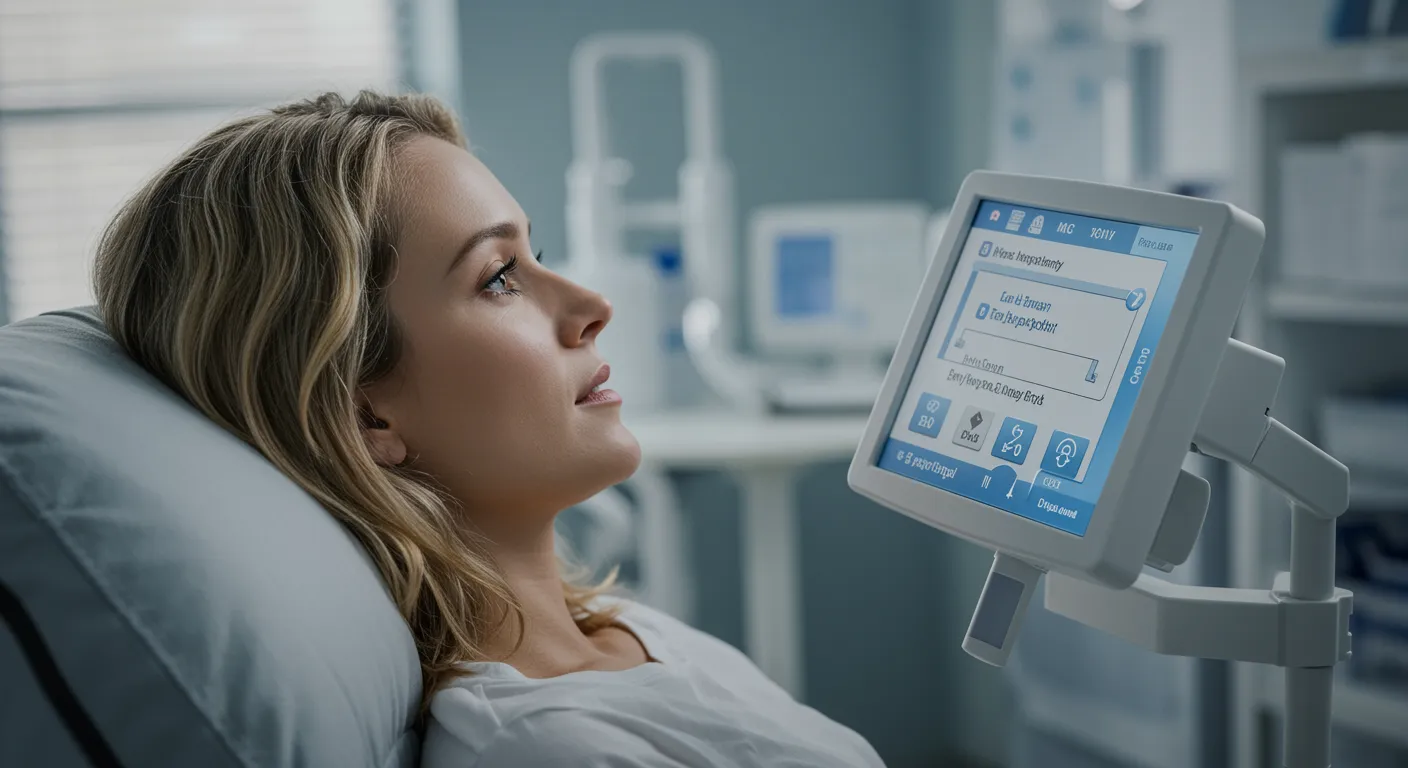
Polysomnography (PSG) performed in a sleep laboratory remains the benchmark for diagnosing sleep-related breathing disorders (SRBD). However, for most patients, spending a night connected to multiple sensors in an unfamiliar clinical setting can be both uncomfortable and costly. As awareness of sleep health expands and demand for testing continues to outpace the availability of accredited labs and technologists, the need for scalable, patient-friendly diagnostic tools has become evident.
Home Sleep Apnea Testing (HSAT) has emerged as a clinically validated alternative — offering an accessible path for identifying obstructive sleep apnea (OSA) while maintaining diagnostic reliability. Unlike consumer sleep trackers that are often unregulated or wellness-oriented, HSAT systems are FDA-cleared medical-grade tools designed specifically for clinical assessment.
Your oral health is more important than you might realize. It's not just about having a bright smile, it's about maintaining your overall well-being. Regular dental check-ups, proper brushing and flossing, and a healthy diet can prevent many dental issues.
Traditional HSAT Systems: Strengths and Shortcomings
The conventional HSAT, commonly known as a type III sleep study, records parameters such as airflow, respiratory effort, heart rate, and oxygen saturation. This streamlined setup — with fewer sensors than in-lab PSG — provides high sensitivity and specificity for detecting OSA, especially moderate-to-severe cases.
Devices such as NOX-T3S and Falcon have modernized these tests with Bluetooth connectivity and compact sensors, improving patient comfort without compromising data quality. Still, the absence of electroencephalography (EEG) restricts these devices from measuring sleep stages or cortical arousals, meaning total recording time is often used as a substitute for total sleep time — a limitation that can lead to underestimation of the apnea-hypopnea index (AHI).
Next-Generation HSAT Devices: Streamlined and Smart
The new generation of type II systems represents a leap forward. The Onera Sleep Test System, for example, is a self-applied, wireless patch-based solution usable both at home and in-lab. It captures a comprehensive range of physiological signals comparable to PSG but with a setup that takes under five minutes.
Similarly, DormoVision X, cleared by the FDA in December 2024, integrates AI-driven analytics and adaptive monitoring capabilities. Its modular design allows configuration for type I, II, or III studies — and supports single-night as well as multi-night evaluations. Such flexibility enhances diagnostic accuracy by accounting for natural night-to-night variability.
Peripheral Arterial Tonometry: Compact and Convenient
Peripheral Arterial Tonometry (PAT) — FDA-approved since 2001 — measures subtle changes in vascular tone linked to sympathetic nervous activation during respiratory events. This technology uses photoplethysmography (PPG) to track blood-volume shifts, offering a simplified, minimally invasive approach.
Leading examples include SleepImage, Belun Ring, Happy Ring, NightOwl, and TipTraQ, which record PPG via finger or body-mounted sensors. Systems such as WatchPAT One, EnsoSleep PPG, and ANNE Sleep expand this by adding chest sensors for enhanced data capture. Other form factors — like SANSA (chest, PAT + ECG) and Somfit (forehead, PAT + EEG) — demonstrate the diversity in sensor placement and physiological insights.
Reusable platforms such as EnsoSleep PPG and Somfit offer cost-efficiency for clinics, whereas disposable units like WatchPAT One or NightOwl minimize reprocessing time. Multi-night recorders including Belun Ring and Happy Ring can better represent habitual sleep behavior, and the latter even extends to continuous 24/7 biometric tracking.
Clinical validation supports the reliability of PAT/PPG-based HSATs in identifying moderate-to-severe OSA, though accuracy drops for milder cases. Therefore, a negative HSAT in a symptomatic patient should still prompt confirmatory PSG testing.
Pediatric HSAT: Limited Tools, Greater Caution
The use of HSAT in pediatric populations remains constrained. Devices such as NOX-T3 and WatchPAT One are approved for children ≥ 12 years, while SleepImage and DormoVision X extend eligibility to ages 2 and 6 years, respectively.
Despite these developments, most pediatric HSATs lack CO₂ monitoring and arousal detection, limiting diagnostic precision. Research indicates potential overestimation of AHI in obese adolescents, reinforcing that in-lab PSG remains the most comprehensive option for children — with HSAT reserved for special situations where PSG is not feasible.
Emerging Sensor Modalities: Beyond PPG
Recent innovations are expanding the physiological scope of HSAT devices:
🔹AcuPebble SA100 — an acoustic neck sensor validated for moderate-to-severe OSA. Its successor, AcuPebble OX100, integrates a fingertip oximeter for richer datasets.
🔹Sunrise — a lightweight chin sensor that detects mandibular movements, correlating strongly with respiratory effort.
🔹Wesper — dual biosensor patches (chest + abdomen) capturing thoracoabdominal motion to assess airflow and detect potential central sleep apnea (CSA).
These non-traditional systems are promising for advanced respiratory pattern recognition, though ongoing validation is required before broad clinical deployment.
Final Thoughts
Modern HSAT devices have transformed sleep diagnostics, merging portability, patient comfort, and clinical reliability. Yet, they are not universally applicable — especially in complex respiratory disorders like hypoventilation or CSA.
For practitioners, selecting the right HSAT requires considering patient age, comorbidities, and the diagnostic threshold used (AHI 3% vs 4%). Beyond initial diagnosis, HSATs play an increasingly valuable role in tracking treatment efficacy and long-term outcomes for OSA management.
As technology continues to evolve, clinicians must stay informed about each device’s unique features, capabilities, and regulatory status. For up-to-date information, professionals can reference the AASM Sleep Technology Directory, a curated resource of FDA-cleared clinical and consumer sleep devices.
About the Author
Dr. Pankaj Singh is a board-certified expert in Dental Sleep Medicine and Orofacial Pain, with over two decades of clinical and academic experience. As founder of Appnea.ai and director of Arch Dental Sleep Medicine Center, he focuses on integrating precision diagnostics, AI, and minimally invasive therapeutics to advance patient-centric sleep care.

Need help ?
Schedule your initial consultation today and start your journey towards a pain-free, healthier smile. Contact us now!
Blog Suggestions

Why Follow-Ups and Professional Guidance Are Essential for Mandibular Advancement Device Therapy
Mandibular Advancement Devices (MADs) have become a cornerstone in treating mild to moderate Obstructive Sleep Apnea (OSA), especially for patients who cannot tolerate Continuous Positive Airway Pressure (CPAP) therapy.
5 Strategies for Discussing Preventive Care with Your Patients
Preventive care is the foundation of modern dentistry — yet, for many patients, its true value often goes unrecognized. While clinicians understand the far-reaching benefits of preventive dentistry, patients may see it as just another expense or inconvenience.
7 Questions to Ask Older Patients About Health Issues That Can Impact Oral Health
The United States is experiencing an unprecedented demographic shift: nearly one in five Americans is now aged 65 or older — the highest proportion of seniors in the nation’s history. As this population grows, dental professionals are seeing an increase in age-related oral health challenges that require both sensitivity and deeper medical awareness.
The hidden link between oral health and stroke what new research reveals
For years, medical and dental professionals have suspected a connection between oral health and cardiovascular disease. Now, new evidence confirms that poor oral health — particularly when gum disease and cavities occur together — may significantly increase the risk of ischemic stroke, one of the leading causes of death and disability worldwide.