
Run Verification of Benefits Before You Take the Impression
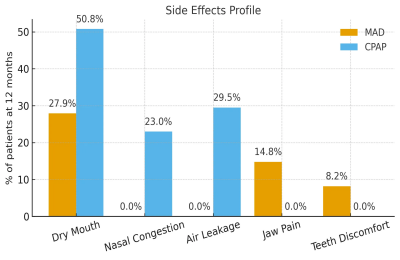
Run verification of benefits before you take the impression. Not after the consult, not while the lab case is in transit, and never after delivery. A dental sleep case that reaches delivery without a completed verification of benefits (VOB) is a case where the practice has already absorbed lab cost, chair time, and clinical risk with no confirmed payment source. The math is unforgiving: a single unverified case that ends in a write-off can erase the margin on three clean cases. This is the sequencing, the case-acceptance arithmetic, and the honest version of what patients actually owe.
Why the Impression Is the Point of No Return
Before the impression or intraoral scan, the practice's exposure is a consultation slot. After it, the practice has committed to a lab fee that is typically 400 to 900 USD depending on the device, a fabrication turnaround that occupies the case, and a patient expectation that something is coming. Custom appliances cannot be returned or resold. That makes the impression appointment the correct hard gate for financial clearance, and it is why mature practices treat "VOB complete" as a scheduling prerequisite rather than a parallel task.
What a Complete Verification of Benefits Actually Captures
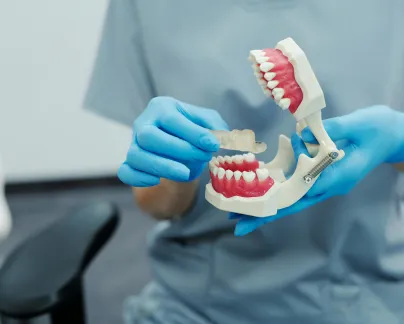
Your oral health is more important than you might realize. It's not just about having a bright smile, it's about maintaining your overall well-being. Regular dental check-ups, proper brushing and flossing, and a healthy diet can prevent many dental issues.


A VOB that only confirms "the patient has medical coverage" is not a VOB. The call or portal check should produce a written record of:
- Whether the plan is fully insured or self-funded, since self-funded plans set their own criteria regardless of the carrier's published policy.
- Whether E0486 is a covered benefit under the DME provision, and whether DME has a separate deductible.
- The remaining medical deductible and how much of it the patient has met year to date.
- Coinsurance percentage after deductible, and whether the out-of-pocket maximum has been reached.
- In-network versus out-of-network status for the practice, and the out-of-network allowable if applicable.
- Whether prior authorization is required, and the exact submission pathway and turnaround.
- Whether the plan requires documented CPAP failure before approving an oral appliance.
- Any frequency limitation, commonly one device per three or five years.
- The reference number for the call, the representative's name, and the date.
That last item is not bureaucratic padding. When a plan later contradicts what was quoted, the reference number is the practice's only leverage.
The Case-Acceptance Math
Case acceptance in dental sleep medicine is driven less by persuasion than by whether the number presented is credible and final. Consider a representative case with a 3,200 USD fee:
- Patient has met 400 USD of a 1,500 USD medical deductible. Remaining deductible: 1,100 USD.
- Plan allowable for E0486 in network: 2,100 USD.
- Coinsurance after deductible: 20 percent.
- Patient responsibility: 1,100 USD deductible plus 20 percent of the remaining 1,000 USD allowable, which is 200 USD. Total patient portion: 1,300 USD.
- Plan pays 800 USD. In-network write-off against the 3,200 USD fee: 1,100 USD.
- Practice collects 2,100 USD total against a lab cost of roughly 600 USD.
Presenting this as "insurance will cover most of it" is how practices generate accounts receivable problems and angry phone calls. Presenting it as "your portion is 1,300 USD, and here is why" is how practices close cases and collect at delivery.
The AR Math That Practices Get Wrong
Days in accounts receivable is where unverified cases show up three months later. Two structural rules:
- Collect the patient portion at or before delivery, not after the claim adjudicates. Once the appliance is in the patient's mouth, collection leverage drops sharply and collection cost rises. Practices that collect at delivery routinely run AR under 30 days; practices that bill after adjudication commonly sit at 60 to 90.
- Treat any case over 90 days as a workflow failure requiring root-cause review, not a collections task. Ageing balances in dental sleep almost always trace back to a VOB that was skipped, a prior authorization that was never obtained, or a patient portion that was estimated optimistically.
A practical benchmark: if more than 10 percent of delivered cases have an outstanding patient balance at 60 days, the problem is in the financial conversation, not the billing department.
The Honest Version of What Patients Owe
Patients arrive believing one of two things, and both are wrong. Some believe medical insurance covers the appliance entirely. Others believe it covers nothing because dental insurance does not. The honest framing sounds like this:
"This is billed to your medical insurance, not your dental plan. Based on what your plan told us on the fifteenth, your deductible and coinsurance come to about 1,300 USD. That estimate holds unless your plan processes it differently than they quoted us, and if that happens we will show you exactly what changed. We collect your portion at delivery. If the plan denies, we appeal at no cost to you, and here is what happens to your balance while that runs."
Three elements make that work: the number is specific, the source of the number is named, and the failure case is addressed before the patient has to ask. Practices that hedge with ranges invite the patient to hear the low end and remember it as the quote.
Building the Gate Into the Schedule
The operational fix is a status field, not a reminder. The impression appointment should be unbookable until the case record shows: VOB complete with reference number, prior authorization obtained or confirmed not required, patient financial agreement signed with the specific dollar figure, and the sleep study and physician order on file. Practices that enforce this at the scheduling layer stop having the conversation about whether to enforce it. Software that surfaces the incomplete item is more effective than a checklist that depends on someone remembering to look.
Key Takeaways
- The impression is the point of financial no return, so the VOB gate belongs before it.
- A real VOB captures deductible, coinsurance, network status, prior auth, frequency limits, and a call reference number.
- Present a specific patient portion with its source, not a reassurance that insurance covers most of it.
- Collect the patient portion at or before delivery to keep AR under 30 days.
- Enforce the gate in scheduling software rather than relying on memory.
Frequently Asked Questions
Q: Can we take the impression while prior authorization is pending?
A: Only as a deliberate, documented risk decision with the patient informed in writing. Retroactive authorization is rarely granted, and the lab cost is unrecoverable.
Q: How long is a VOB good for?
A: Benefits reset annually and can change mid-year. Re-verify if more than roughly 30 days pass between verification and delivery, and always across a plan year boundary.
Q: What if the plan pays less than quoted?
A: Appeal with the call reference number and representative name. Many plans honour a documented quote. Decide in advance whether the practice or the patient absorbs the difference, and put that in the financial agreement.
Q: Should we bill dental insurance as a backup?
A: Oral appliance therapy for OSA is a medical benefit. Dental plans rarely cover it, and billing them first delays the medical claim and confuses the patient.
Q: Is it worth doing VOB for cash-pay patients?
A: Yes, briefly. Many self-identified cash-pay patients have out-of-network medical benefits they do not know about, and a superbill can return real money to them.
Final Thoughts
Verification of benefits is not administrative overhead attached to clinical work. It is the step that determines whether clinical work gets paid for. Practices that move the VOB ahead of the impression and present an honest, specific patient portion see higher case acceptance, not lower, because credibility closes cases that optimism does not. The patient who knows exactly what they owe before treatment starts is the patient who completes therapy, pays on time, and refers.

Need help ?
Schedule your initial consultation today and start your journey towards a pain-free, healthier smile. Contact us now!
Blog Suggestions
Medical Billing Is Not Dental Billing
Why cross-training one front-desk person usually fails, the structural differences that break it, and the division of labour that actually works in a dental sleep practice.
Medical Credentialing for a Dental Sleep Practice
Realistic timelines, CAQH discipline, and the in-network versus cash-pay decision — including why the out-of-network model nets more per case for many practices.
GLP-1s After Zepbound: Referral Source, Not Competitor
The FDA approved tirzepatide for moderate-to-severe OSA in adults with obesity. Why residual disease, long treatment intervals, and discontinuation make this one of the strongest new referral sources in dental sleep medicine.
The First Joint AASM/AADSM Oral Appliance Guideline
Patient preference is now an explicit indication, not just CPAP intolerance. What to change in your consent form, titration protocol, and follow-up schedule.